
E-Cigarettes vs Traditional Cigarettes Effects on Gums
E-Cigarettes vs. Traditional Cigarettes: Which Is Worse for Your Gums?
If you've recently swapped traditional cigarettes for a vape, you might be breathing a sigh of relief. Without the harsh smoke, the tar, and the lingering smell, it’s easy to assume you’ve made a clean break for your health. After all, it's just harmless "water vapour," right?
Unfortunately, this is one of the most common—and dangerous—illusions in modern oral health.
When it comes to your gums, asking whether vaping is "safer" than smoking is a bit like asking if it’s safer to leave your front door wide open or unlocked. Neither option protects the house. While traditional smoking and vaping deliver nicotine in vastly different ways, they each trigger a unique cascade of biological damage inside your mouth.
Let’s step away from the confusing jargon and look directly at what is happening beneath your gumline when you smoke or vape, why your body's natural alarm bells might be switched off, and what you can do to protect your smile.
The Biological Battlefield: Two Different Types of Damage
To understand how these habits affect your mouth, we have to look at the entirely different environments they create. We aren't just comparing "bad" to "worse"—we are looking at two completely different mechanisms of tissue damage.
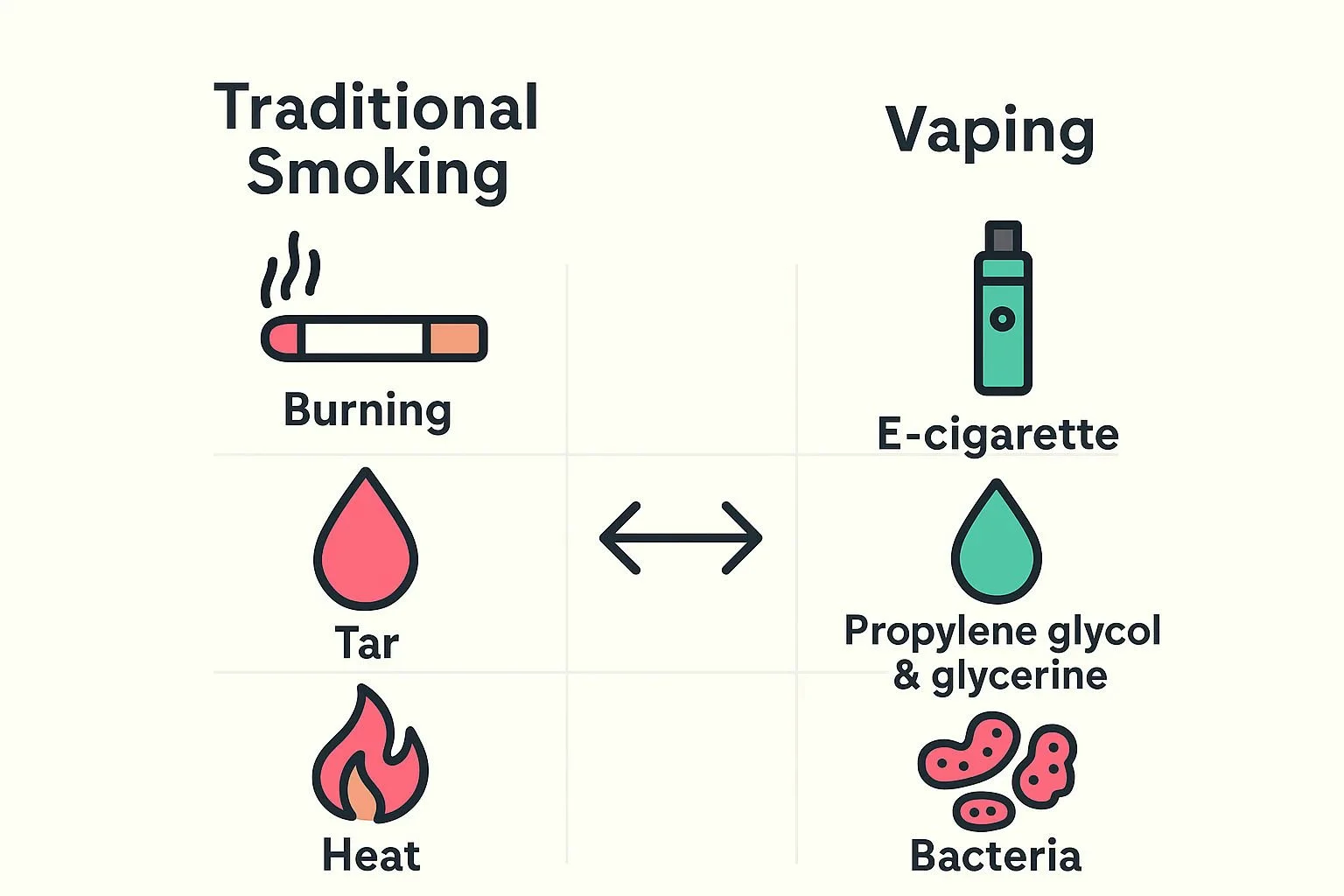
Traditional Smoking: The "Scorched Earth" Approach
Combustible cigarettes are a blunt instrument of destruction. When you smoke, you are introducing extreme heat, carbon monoxide, and thick, toxic tar into a delicate ecosystem.
This heat physically burns the micro-tissues in your mouth, while the carbon monoxide rapidly starves your gum tissues of oxygen. Over time, the heavy tar coats the surfaces of your teeth, creating a rough, gritty surface. This scorch-and-coat method makes it incredibly easy for harmful bacteria to anchor themselves to your teeth and begin destroying the surrounding bone. It's why smokers face an 85% increased risk of severe periodontitis compared to non-smokers.
Vaping: The "Sticky Trap"
Because e-cigarettes don't produce tar or extreme heat, many assume they leave the gums alone. However, vaping introduces a unique chemical environment.
E-liquids rely on carrier liquids—specifically Propylene Glycol (PG) and Vegetable Glycerine (VG)—along with complex flavouring chemicals. When heated and inhaled, these compounds don't just disappear. They leave behind a viscous, sugar-like coating on your teeth and gums.
If smoking is "scorched earth," vaping is a "sticky trap." This thick biofilm is the perfect breeding ground for specific harmful bacteria, such as S. aureus. The sticky environment traps bacteria against your gumline far more effectively than a dry mouth would, accelerating bacterial colonisation and leading to rapid tissue inflammation.
The Vasoconstriction Paradox: The "Silent" Decay
Perhaps the most sinister element shared by both traditional smoking and e-cigarettes is nicotine.
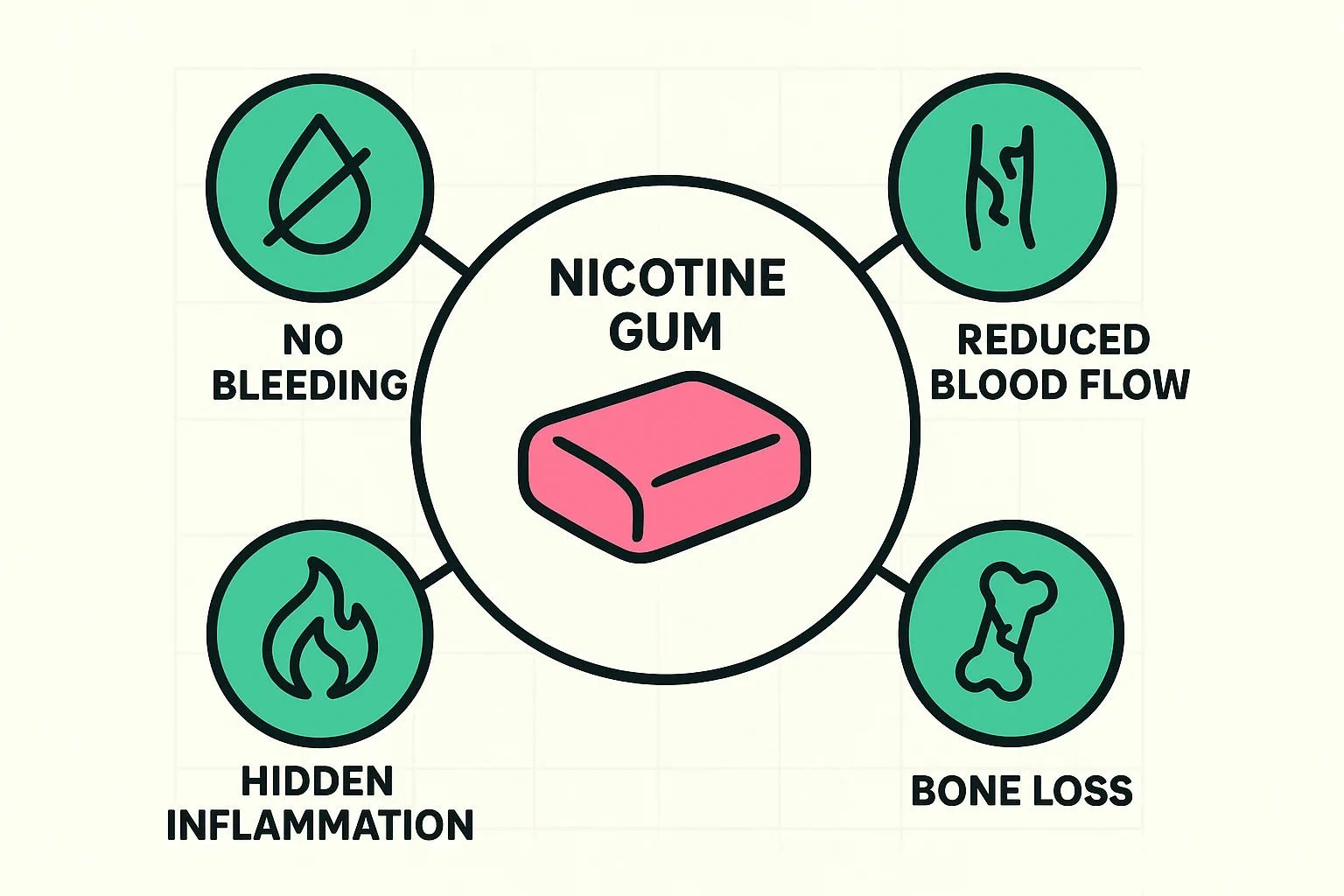
Nicotine is a powerful vasoconstrictor, meaning it rapidly shrinks your blood vessels. Why does this matter for your gums? Think of healthy blood flow as your body's built-in alarm system. When bacteria attack your gums, your body sends a rush of blood to the area to fight the infection. This causes inflammation, redness, and bleeding when you brush.
Bleeding gums are your body shouting, “Hey! We have an infection down here!”
Nicotine unplugs that alarm. By choking off the blood supply to your gums, nicotine prevents the tissue from bleeding or swelling. You could be suffering from severe, active bone loss, yet your gums will look perfectly firm and pink. We call this the Nicotine Masking Effect. By the time you notice something is wrong—like a tooth feeling loose—the damage is already severe.
Clinical Consequences: Beyond Just Receding Gums
Because vaping is heavily marketed toward younger demographics, periodontal experts are seeing a troubling shift. Many wonder, is gum disease common in young adults? Historically, severe gum disease took decades to develop. Today, the sticky bacterial traps created by vaping are accelerating this timeline.
When the pain or discomfort finally breaks through the nicotine masking effect, patients often scramble for home remedies for sore gums. But salt water rinses can't restore lost bone or repair tissue starved of oxygen.
Furthermore, the lack of blood flow ruins your body's ability to heal. Nicotine inhibits fibroblasts—the cells responsible for producing collagen and repairing wounds. This compromised healing capacity is disastrous if you ever need dental implants; studies show that nicotine usage can drop the success rate of dental implants from a highly predictable 98% down to a risky 70-85%.
The Path to Recovery: Healing Compromised Gums
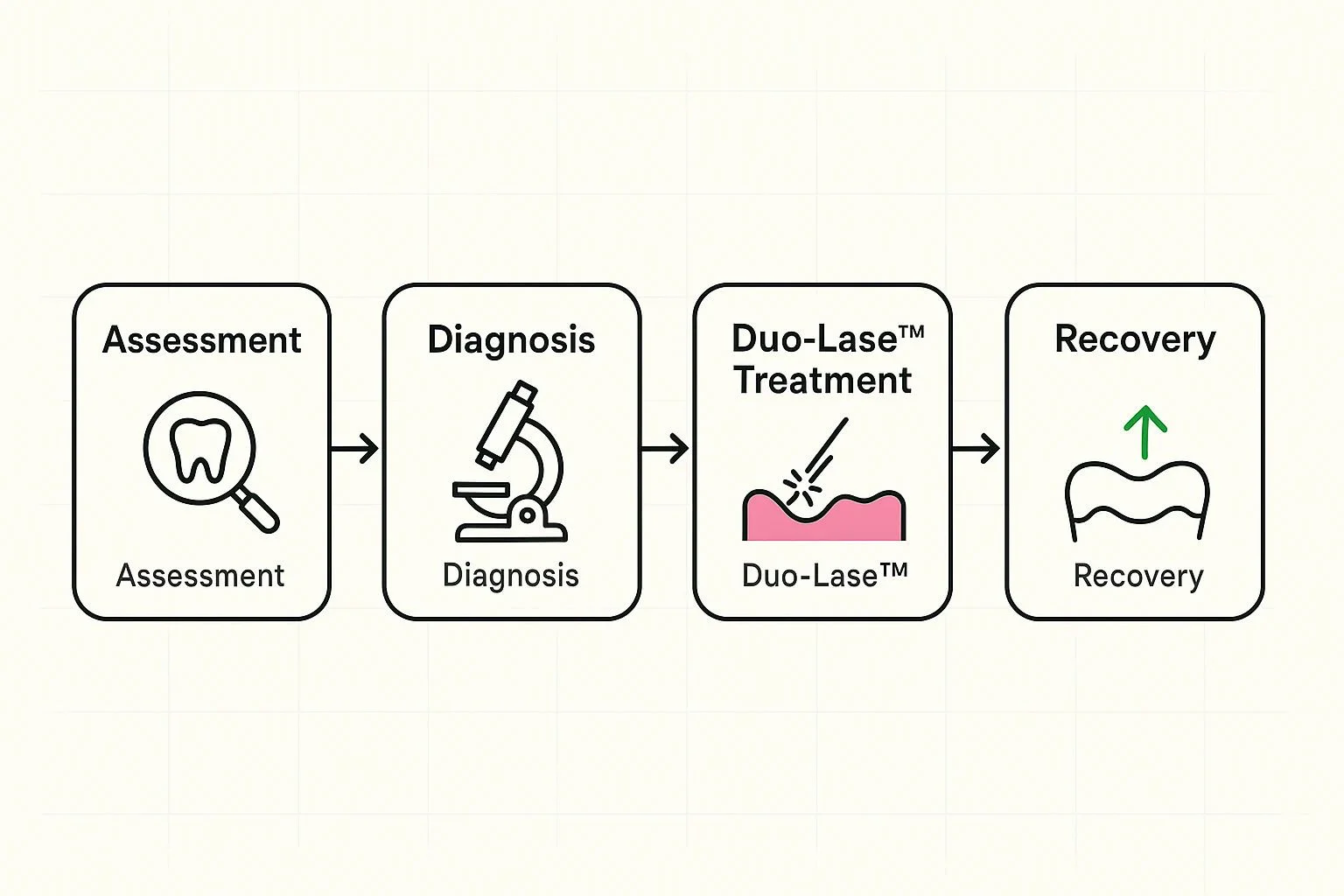
If you use e-cigarettes or traditional tobacco, the first and most vital step is understanding exactly what bacteria are living in your gum pockets. Because standard dental check-ups rely heavily on visual cues (which nicotine hides), you need advanced diagnostics.
At The Behrens Dental Practice in London, the first step is a Micro Perio Analysis. This involves a microbiological DNA test to identify the exact bacteria causing the disease, combined with precise staging and grading to create a highly personalised treatment plan.
But how do you treat gums when the body’s natural healing capacity has been compromised by years of nicotine? Traditional treatments like a standard full mouth debridement or invasive gum surgery can be daunting, especially when tissue struggles to heal.
This is where advanced laser therapy steps in. The practice utilises an exclusive, non-invasive treatment called duolase.
Duo-Lase™ is uniquely suited for compromised tissues because it doesn't involve cutting or sutures. Instead, it uses a precise dual-laser approach:
The Nd:YAG Laser: This laser performs "photodynamic pocket decontamination," effectively removing the specific bacteria that cause the disease. Crucially, it also acts as an anti-inflammatory for the gum, helping it heal, and supports the creation of a new cell layer on the root surface—including cementoblasts, which help physically close the periodontal pockets.
The Diode Laser: The second laser provides biostimulation. It encourages further healing and stimulates vital collagen production in both the bone and the gum tissue.
Finally, the laser creates a secure fibrin seal against the tooth, protecting the freshly treated area from new bacteria. Because it stimulates the body's cellular response rather than cutting tissue away, it provides fast healing periodontal care without the intense recovery periods of traditional surgery.
Patients typically require an average of 10 laser sessions (which can be completed up to 3 times per week). The procedure is incredibly comfortable—usually performed entirely without anaesthetic—and requires absolutely no downtime.
Frequently Asked Questions
Are e-cigarettes safer for gums than smoking?
They are not "safer," but rather damaging in a different way. While they lack the tar and heat of combustible tobacco, the carrier liquids (PG/VG) create a sticky biofilm that aggressively traps bacteria against the gums. Both habits deliver nicotine, which masks the warning signs of gum disease.
Can vaping cause receding gums?
Yes. The bacteria trapped by e-liquid residue produce toxins that inflame the gums and destroy the underlying bone. As the bone deteriorates, the gum tissue recedes along with it, exposing the sensitive roots of your teeth.
Why do my gums hurt after I vape?
Vaping draws moisture out of the mouth, causing severe dry mouth. Saliva is your mouth's natural defence mechanism against acid and bacteria. Without it, your gums become easily irritated, inflamed, and prone to bacterial infection, leading to a dull ache or sensitivity.
How do I heal my gums after quitting vaping?
Quitting is an excellent first step, but existing bacterial infections deep within the gum pockets will not resolve on their own. You will need a professional assessment. Your gums will likely need deep cleaning or advanced therapies like Duo-Lase™ to eliminate the trapped bacteria and stimulate the tissue to regenerate.
Protect Your Smile with Precision Care
Whether you smoke, vape, or are currently transitioning away from nicotine, you don't have to wait for your teeth to feel loose before taking action. Because nicotine hides the traditional signs of gum disease, proactive screening is your best defence.
If you are concerned about how e-cigarettes or traditional smoking have affected your gum health, reach out to the periodontal experts at The Behrens Dental Practice for a comprehensive Micro Perio Analysis. Discover how the non-invasive Duo-Lase™ treatment can eliminate harmful bacteria and help you preserve your natural teeth for a lifetime.