
Does Vaping Cause Gum Disease What Research Shows
Does Vaping Cause Gum Disease? What the Latest Research Shows
You’ve swapped the cigarette for a sleek, flavored vape pen. For many health-conscious professionals navigating busy lives in London, making the switch feels like a definitive step toward better health. After all, if you aren’t inhaling tar and tobacco smoke, your body—and your smile—must be better off, right?
But lately, you might have noticed something subtly changing in your mouth. Perhaps your teeth look a little "longer" than they used to in photos, or your morning coffee is suddenly sending a sharp ping of sensitivity through your jaw. You brush and floss, and your gums don't bleed, so everything must be fine.
Unfortunately, the lack of bleeding might be the very thing hiding a growing problem.
As clinical evidence mounts, dental researchers are uncovering a fascinating, albeit concerning, reality about e-cigarettes and oral health. Let's dive into the science of how vaping interacts with your gums, why your mouth might be playing tricks on you, and what the latest research means for your smile.
The Modern Myth: Is Vaping Really Safe for Your Gums?
Because e-cigarettes don't produce traditional smoke, they sidestep many of the stains and odors associated with conventional cigarettes. However, vaping still delivers a highly concentrated dose of nicotine and heat directly into your oral cavity.
If you are a frequent user, you might be wondering, is gum disease common in young adults who vape? Surprisingly, yes. Recent studies show that e-cigarette users face a significantly higher risk of developing periodontal (gum) issues compared to non-users. The reason lies not in the vapor itself, but in how the chemicals inside that vapor interact with the delicate ecosystem of your mouth.
The Vasoconstriction Paradox: Why Lack of Bleeding is a Red Flag
If you ask the average person to name the most obvious sign of gum disease, they will almost always say: bleeding gums.
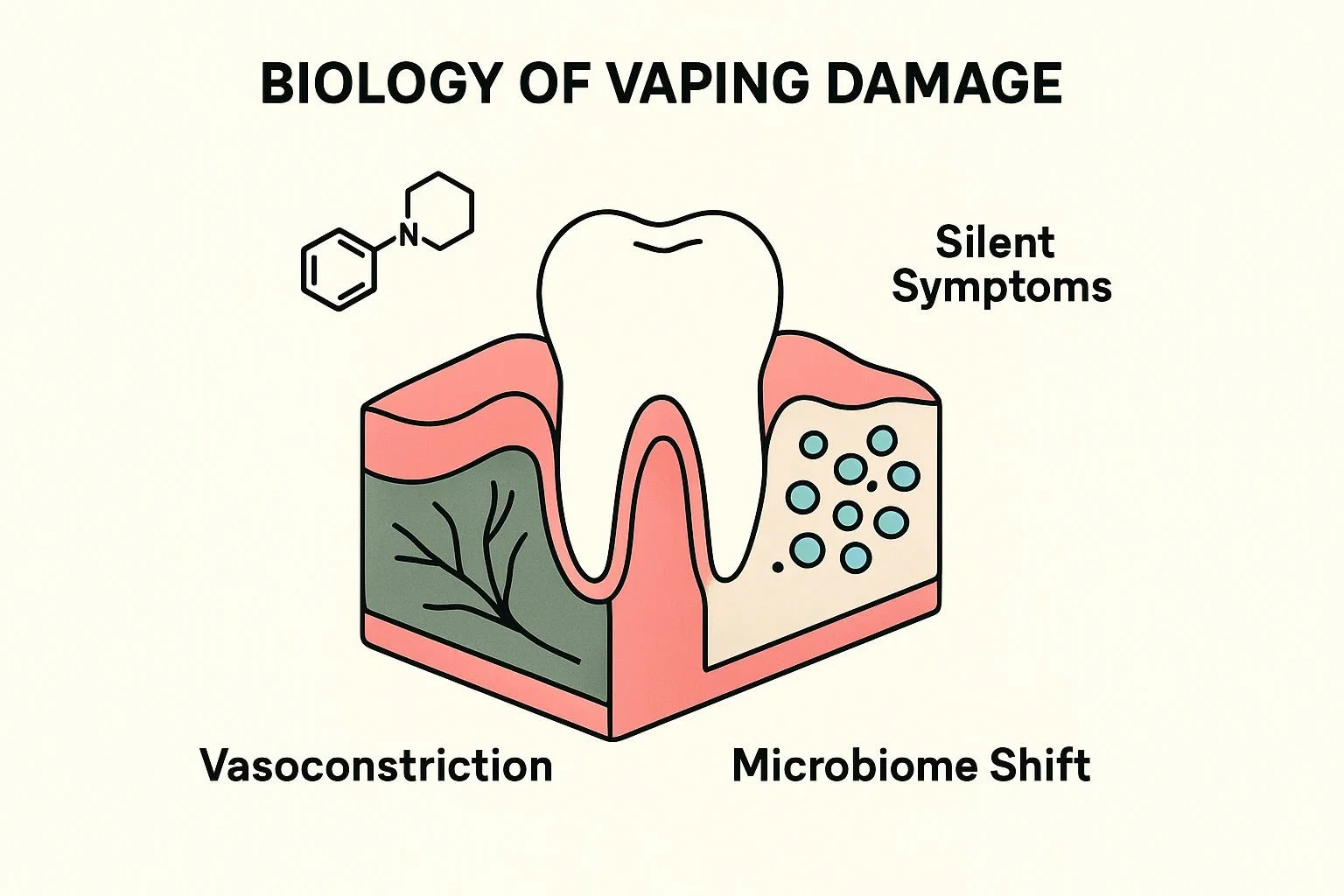
Here is where the "silent trap" of vaping comes into play. Nicotine is a potent vasoconstrictor, meaning it shrinks your blood vessels and restricts blood flow. When you vape, the nicotine essentially "chokes" the tiny blood vessels in your gums.
Because the blood supply is cut off, your gums won't bleed when you brush or floss—even if they are severely inflamed and infected. This creates a false positive for health. You assume your gums are perfectly fine, while beneath the surface, the restricted blood flow is preventing your immune system from fighting off harmful bacteria.
The Microbiome Shift: How Vaping Changes Your Mouth's Bacteria
Your mouth is home to a balanced microbiome. When you vape, the heat and chemical aerosols dry out your mouth and alter this delicate environment.
Without sufficient saliva to wash away debris, and with a compromised immune response due to restricted blood flow, harmful bacteria—specifically one called P. gingivalis—begin to rapidly multiply. As these bacteria thrive, they trigger chronic inflammation. Over time, the gum tissue pulls away from the teeth, creating deep gum pockets where even more bacteria can hide and erode the supporting bone.
Recognizing the Invisible: Signs of Vaping-Induced Damage
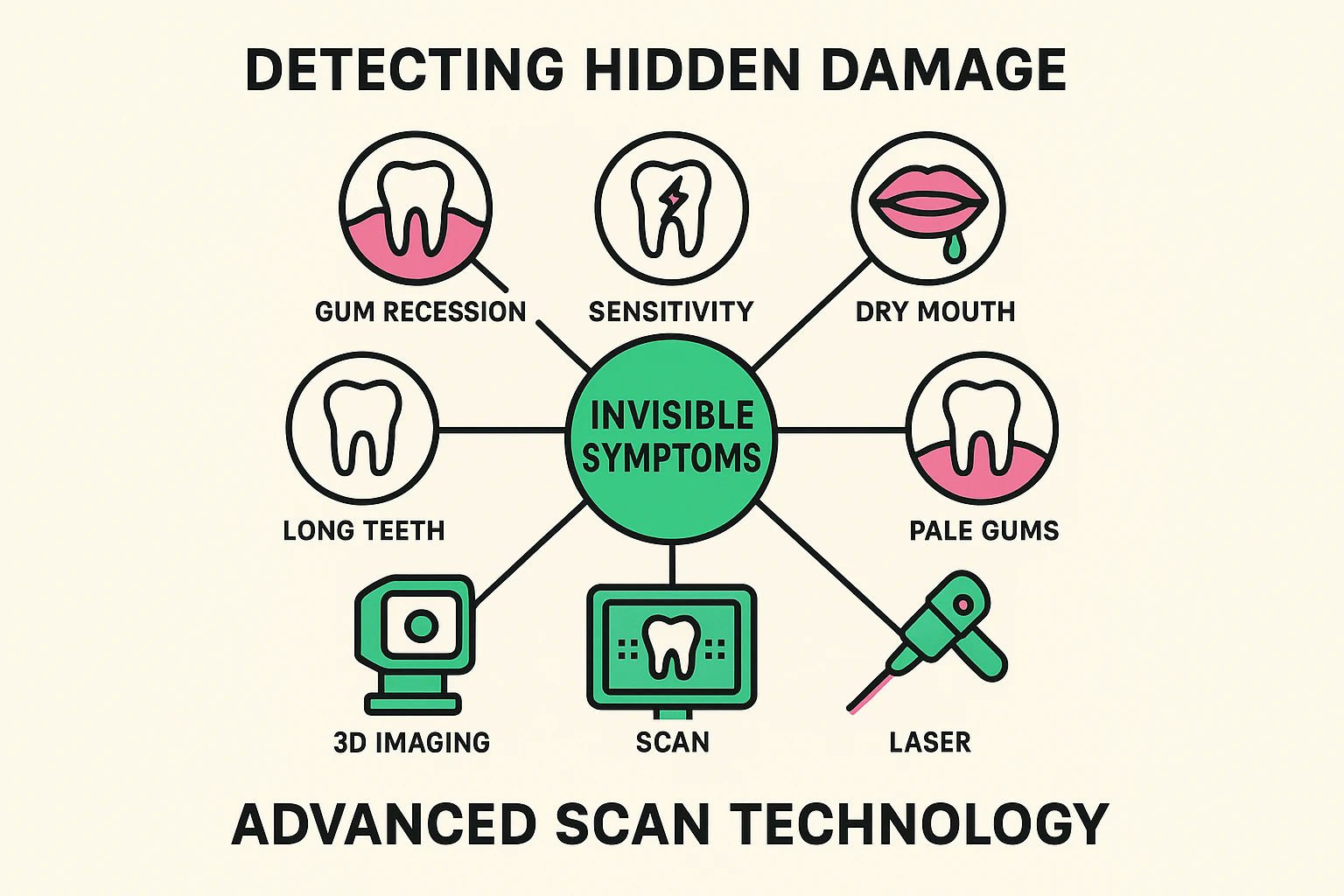
Because you can't rely on bleeding as a warning sign, you have to look for the "invisible" symptoms of vaping-related gum damage. Understanding the different periodontal disease stages helps, but day-to-day, keep an eye out for:
Gum Recession: Your teeth appear longer, or you can feel a ridge near the gumline with your fingernail.
Temperature Sensitivity: A sudden sharp pain when drinking hot coffee or cold water, caused by exposed tooth roots.
Persistent Dry Mouth: Often referred to as "vaper's tongue," a constant lack of saliva accelerates bacterial growth.
Shifting Teeth: A feeling that your bite has changed or your teeth are slightly loose.
Advanced Diagnostics: Seeing What the Mirror Misses
Because vaping masks the traditional symptoms of decay, visual checks are no longer enough. To truly understand what is happening beneath the gumline, periodontal experts rely on specialized testing.
At The Behrens Dental Practice in London, the diagnostic journey begins with a comprehensive Micro Perio Analysis. Instead of simply guessing the extent of the damage, the team takes a microscopic look at the specific bacteria causing the disease. By conducting a microbiological DNA test alongside traditional staging and grading, they can pinpoint exactly which bacteria have colonized your gum pockets. This scientific, data-driven approach removes the guesswork and forms the blueprint for a highly personalized treatment plan.
The Path to Recovery: Reversing the Damage Without Surgery
Historically, treating advanced gum disease meant invasive surgeries, cutting, sutures, and painful recovery periods. For busy professionals, the thought of surgical downtime is often enough to delay treatment entirely.
Fortunately, modern dental technology offers a non-invasive way to heal the specific tissue damage patterns seen in vapers. This is where duo lase therapy completely changes the landscape of periodontal care.
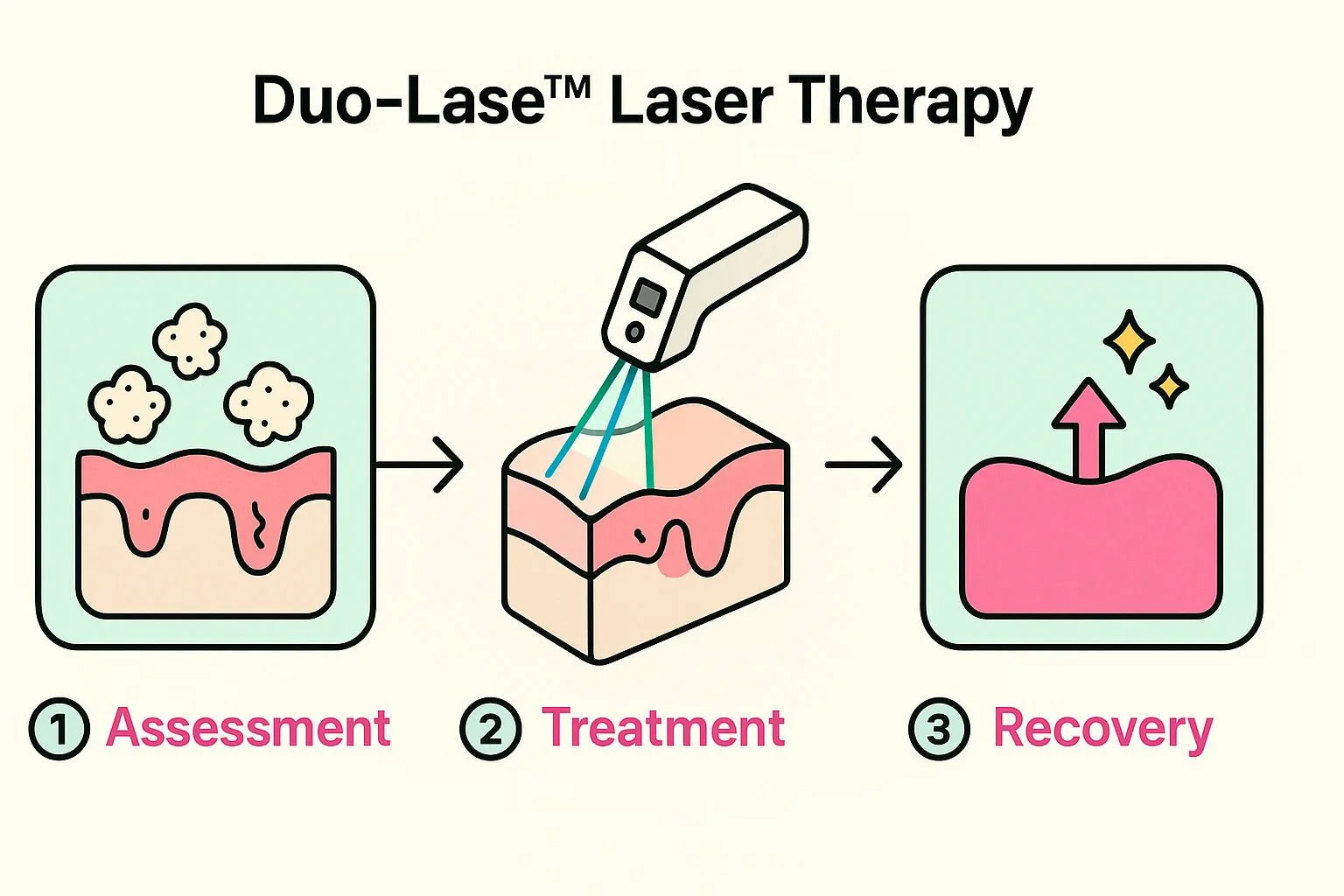
Duo-Lase™ is an advanced therapy that utilizes dual laser technology—specifically, an Nd:YAG laser and a diode laser—working in harmony to eliminate bacteria and stimulate natural healing.
Here is how the science of this non-invasive treatment works:
Photodynamic Pocket Decontamination: First, the Nd:YAG laser targets and removes the specific bacteria that are causing the disease. Simultaneously, this laser acts as a powerful anti-inflammatory for the gums, supporting the creation of a new cell layer on the root surface. This includes the stimulation of cementoblasts—specialized cells that help naturally close the infected pockets.
Bio-Stimulation: Next, the diode laser is applied. This laser excels at biostimulation, promoting further healing and triggering fresh collagen production within both the bone and the gum tissue.
Natural Sealing: Together, the lasers create a protective "fibrin seal" around the tooth, locking out new bacteria and allowing the tissue to heal and regenerate.
The beauty of this dual-laser approach is its ease on the patient. Because it is non-invasive, treatment is usually performed completely without anaesthetic, and there is zero downtime. Patients simply walk in, receive their laser treatment, and walk out ready to continue their day. On average, resolving periodontal disease requires around 10 laser sessions, which can be comfortably scheduled up to three times per week.
Frequently Asked Questions (FAQ)
Does vaping directly cause gum recession?
While vapor itself doesn't "push" the gums down, the nicotine in e-cigarettes restricts blood flow and alters the oral microbiome. This allows harmful bacteria to thrive, causing inflammation that breaks down the underlying bone and tissue, ultimately resulting in gum recession.
Why did my gums start bleeding only after I quit vaping?
This is incredibly common and often causes panic! When you stop vaping, the nicotine is no longer constricting your blood vessels. As healthy blood flow returns to your gums, the "silent" inflammation that was already there finally shows itself in the form of bleeding. It’s actually a sign that your body's natural warning system is working again.
Can laser treatment really fix vape-damaged gums?
Yes. Laser therapy is particularly effective for vapers because it directly addresses the deep-seated bacterial shift in the microbiome. By decontaminating the pockets and stimulating cellular regeneration, lasers help the body naturally rebuild healthy gum attachment without the trauma of traditional surgery.
Next Steps: Taking Control of Your Oral Health
Realizing that vaping may have compromised your gum health can be daunting, but the most important takeaway is that this damage is treatable—especially when caught early. You don't have to wait for extreme pain or loose teeth to take action, and you certainly don't have to resort to painful surgeries.
If you vape and haven't had a specialized periodontal screening recently, the best first step is to get a baseline understanding of your oral microbiome. By addressing the root cause of the bacteria and utilizing advanced, non-invasive therapies like Duo-Lase™, you can effectively stop periodontal disease in its tracks and preserve your natural smile for decades to come.