
Back to Normal Faster with Advanced Periodontal Care
Back to Normal Faster: Comparing Downtime and Daily Life Impact of Duo-Lase™ and Traditional Periodontal Procedures
When most people are diagnosed with gum disease, their first thought isn't usually about the clinical details of pocket depths or bacteria counts. The first thought is often much more practical: "How is this going to mess up my week?"
We naturally worry about the logistics of life. Will I be able to speak clearly during that client presentation on Tuesday? Will I be able to enjoy dinner with my family? How many days will I need to take off work?
For decades, the answers to these questions were discouraging. Traditional gum surgery often meant clearing your schedule, stocking up on soft foods, and preparing for a week of discomfort. But advancements in dental technology have fundamentally shifted this timeline.
Today, the choice between traditional surgery and laser-assisted therapy isn't just a clinical decision—it is a lifestyle decision.
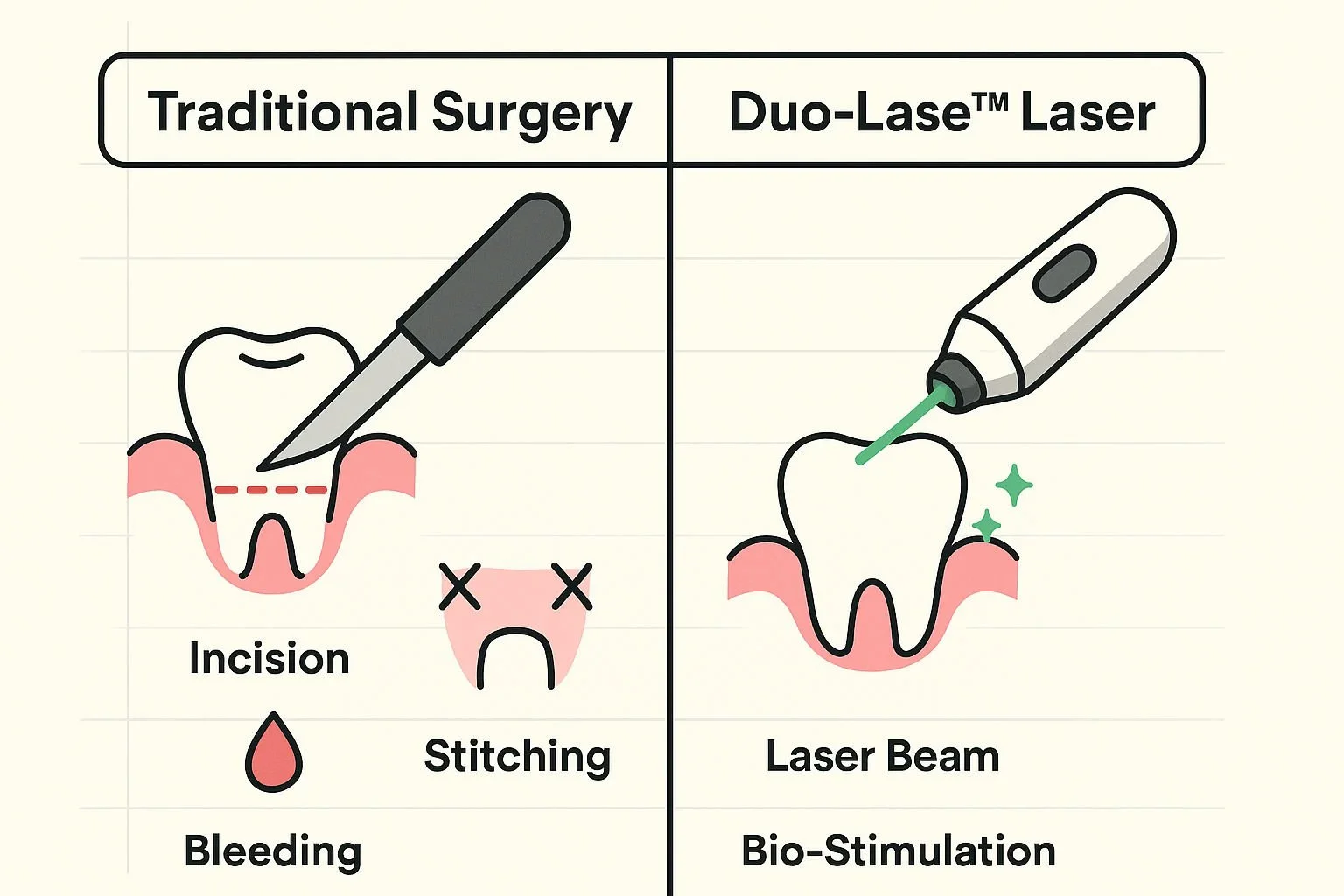
The Scalpel vs. The Light Beam: Why Recovery Differs
To understand why recovery times differ so drastically, we first need to look at what is physically happening to your gums during treatment.
Traditional Periodontal Surgery (often called osseous surgery) is mechanical. To reach the bacteria deep under the gum line, a dentist must use a scalpel to cut the gum tissue and peel it back (creating a "flap"). They scrape away the bacteria and infected tissue, reshape the bone, and then suture (stitch) the gums back into place. It is effective, but it is traumatic to the tissue. The body reacts to this trauma with inflammation and swelling—this is the primary source of post-operative pain.
Duo-Lase™ Therapy, by contrast, is photonic. It uses a microscopic glass fibre roughly the width of three human hairs. This fibre is inserted between the gum and tooth without cutting. The laser energy specifically targets the darker pigments found in harmful bacteria and diseased tissue, vaporising them while leaving healthy tissue intact. Because there are no incisions and no sutures, the body’s inflammatory response is significantly lower.
Understanding what is Duo-Lase™ helps explain why patients can often drive themselves home and return to work immediately, rather than heading to bed with an ice pack.
Your Recovery: A Day-by-Day Comparison
The most common question patients ask is, "What will my week look like?"
When you look at the clinical data, the contrast is stark. Traditional surgery generally requires a recovery window of 7 to 14 days before the mouth feels "normal" again. Laser therapy typically resolves the majority of healing within 24 to 48 hours.
Days 0-1: The Immediate Aftermath
Traditional Surgery: Once the anaesthetic wears off, significant soreness is common. Patients are usually prescribed strong painkillers and advised to use ice packs to manage swelling. Talking may be difficult or uncomfortable due to sutures.
Duo-Lase™: Most patients experience mild sensitivity but little to no actual pain. Pain killers are not necessary. There is no bleeding, and you can speak normally immediately after leaving the chair.
Days 2-3: The Swelling Peak vs. Business as Usual
Traditional Surgery: This is often the peak of swelling and bruising. A liquid or strict soft-food diet is mandatory to avoid tearing stitches. Work meetings or social events are generally out of the question.
Duo-Lase™: For laser patients, life has largely returned to normal. While you may still be advised to avoid very crunchy foods (like popcorn or nuts) to let the tissue settle, most patients are eating regular meals and are back at their desks working.
Day 7: Stitch Removal vs. Forgotten Procedure
Traditional Surgery: You return to the dentist to have sutures removed. The gums may still be tender, red, and receding (shrinkage is a common side effect of cutting).
Duo-Lase™: There are no stitches to remove. The gums often look pink and healthy as the body creates a seal—a natural "bandage"—that reattaches the gum to the tooth. It is important to realise that Duo-Lase consists of several sessions, done 2-3 times per week.
Even for patients dealing with advanced periodontitis, where deep pockets usually dictate invasive surgery, the laser approach maintains this accelerated recovery timeline.
The Science of Rapid Healing: It’s Not Magic, It’s Biology
How can light heal faster than a scalpel? The answer lies in a process called Bio-Stimulation.
Think of treating gum disease like weeding a garden.
Traditional surgery is like tilling the entire garden bed with a shovel. You get the weeds out, but you also tear up the soil and disrupt the roots of the flowers you wanted to keep. It takes a long time for the garden to settle back down.
Duo-Lase™ is like a precision tool that vaporises the weed instantly while simultaneously feeding the surrounding flowers with nutrient-rich fertiliser.
The "fertiliser" in this analogy is the laser energy itself. Beyond just removing bacteria (Photo-Dynamic Pocket Decontamination), the laser stimulates the mitochondria in your cells—the power plants of your body. This boosts collagen production and accelerates tissue regeneration.
Research published in major medical journals supports this, showing that laser therapy not only effectively reduces gum pockets but does so with significantly less post-operative pain and fewer complications than conventional methods.
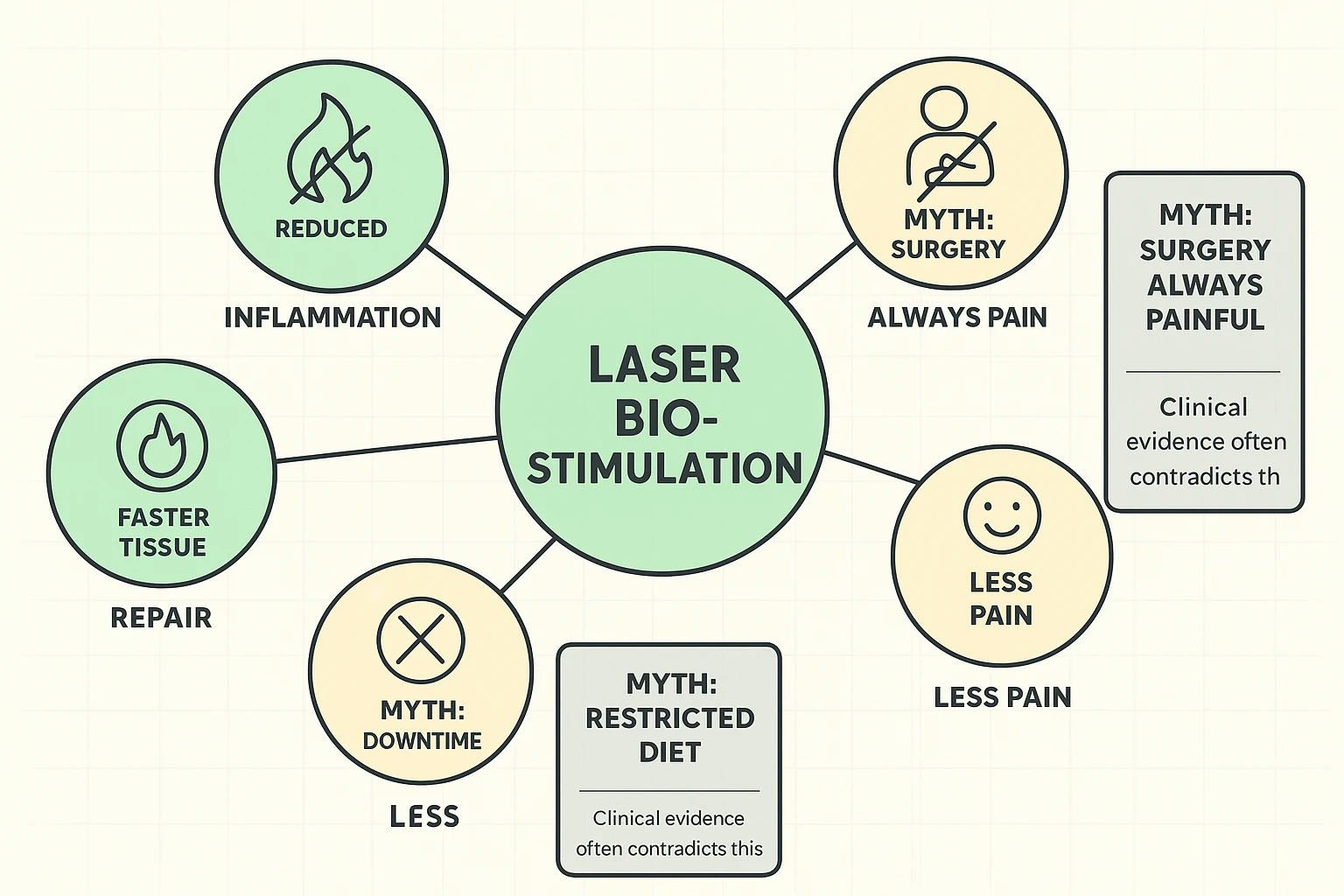
Busting Common Recovery Myths
Because many patients have heard negative stories about gum surgery from parents or friends who had treatment decades ago, misconceptions persist.
Myth: "If it doesn't hurt, it didn't work."
Fact: Pain is a measure of trauma, not effectiveness. A scalpel causes trauma; a laser does not. Clinical studies show that laser treatment is just as effective (often more so) at eliminating bacteria and saving teeth, without the accompanying pain.
Myth: "I will have to take a week off work."
Fact: With Duo-Lase™, patients return to work the same day or the following morning. The treatment is designed to fit into a busy lifestyle, not disrupt it.
Myth: "My gums will recede and look long after treatment."
Fact: Traditional surgery often involves cutting away gum tissue to reduce pocket depth, leading to the "long in the tooth" appearance. Laser therapy aims to regenerate tissue rather than remove it, preserving your natural smile line. It depends if the gum was very swollen at the beginning of the treatment. A healthy gum will tighten up around the tooth, creating a healthy seal. this can ;ead to minor gum recession.
Frequently Asked Questions About Recovery
Can I eat immediately after Duo-Lase™ treatment?
Yes, though we recommend softer foods for the first 24 hours to ensure you don't irritate the area. Unlike traditional surgery, you are not restricted to a liquid diet.
Will I need strong painkillers?
It is very rare for Duo-Lase™ patients to need any pain killers. Over-the-counter anti-inflammatories (like ibuprofen) are typically all that is required, and many patients take nothing at all.
Is it safe for older patients or those with health conditions?
Because the procedure is minimally invasive and involves less bleeding, it is often a preferred option for patients who might be poor candidates for traditional surgery, such as those taking blood thinners or managing diabetes.
Making the Right Choice for Your Health
When you are diagnosed with periodontal disease, the clinical goal is always the same: remove the infection and save your teeth. But the path to that goal varies wildly depending on the method you choose.
If you have been putting off treatment because you cannot afford the downtime or fear the pain of surgery, it is time to reconsider. Modern laser protocols like Duo-Lase™ have transformed periodontal care from a dreaded surgical event into a manageable, health-affirming therapy.
You do not have to put your life on hold to save your smile.