
Minimizing Anaesthesia in Modern Gum Treatment
Minimizing Anaesthesia: Why Modern Gum Therapy Doesn't Always Require the Needle
For many of us, the most anxiety-inducing part of a dental visit isn't the treatment itself—it’s the preparation. It’s the pinch of the needle, the slow pressure of the injection, and the lingering numbness that leaves you unable to speak or drink properly for hours afterward.
In fact, studies consistently show that "trypanophobia" (fear of needles) is a primary reason people delay treating gum disease. We often tell ourselves we’ll go "when it hurts," not realizing that waiting often necessitates the very invasive procedures we’re trying to avoid.
But what if the technology had advanced to a point where the treatment was so gentle, the needle became optional?
This isn't a futuristic concept; it is the reality of modern photobiology. By moving away from mechanical tools (like scalpels) and embracing light energy, we are seeing a paradigm shift in how periodontal therapy is delivered. We are moving from a world where we must numb the mouth to survive the trauma of surgery, to a world where the treatment is often comfortable enough to be performed with little to no anaesthetic at all.
The Physiology of Pain: Why Gums Are So Sensitive
To understand how we can skip the injection, we first have to understand why we needed it in the past. Your gums (periodontal tissues) are densely packed with nerve endings. In traditional dentistry, treating gum disease usually involves mechanical friction—scraping metal instruments against roots or using a scalpel to cut tissue to access deep pockets.
When a nerve is cut or abraded, it sends a high-intensity distress signal to your brain. This is interpreted as sharp pain. To prevent this, dentists use local anaesthesia to chemically block the nerve from sending that signal. The trauma still happens; your brain just doesn't receive the memo until the anaesthetic wears off.
Laser therapy changes this equation entirely. Instead of blocking the signal, it changes how the tissue interacts with the instrument.
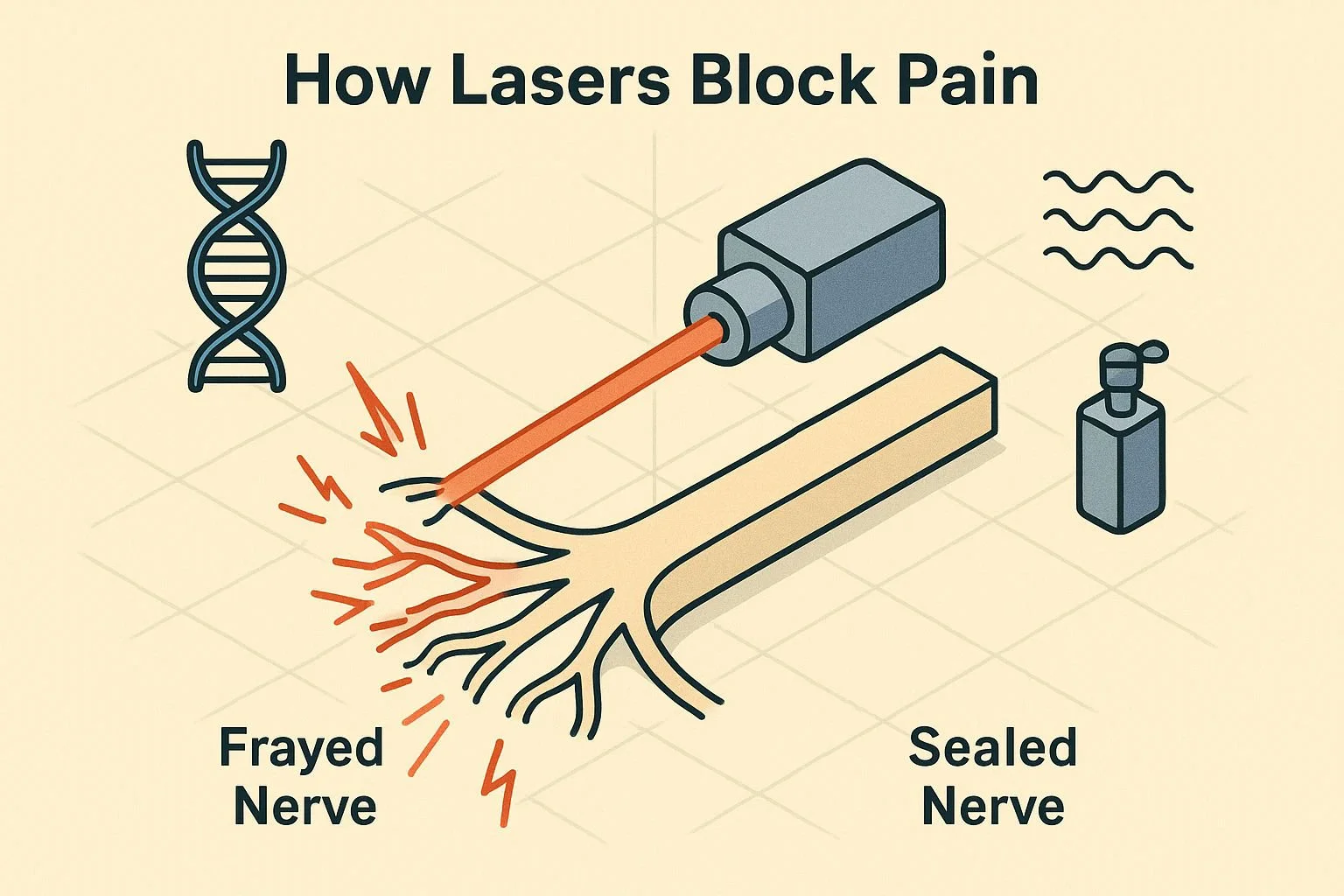
The Science of "Sealing" the Nerve
The reason technologies like duo-lase allow for reduced anaesthesia lies in a process called photothermal interaction.
When the specific wavelengths of light used in Duo-Lase™ contact the tissue, they don't cut in the crude sense that a blade does. Instead, the laser energy vaporises the infected tissue while simultaneously creating a "coagulation effect" on the nerve endings.
Think of a traditional cut as a frayed wire—the ends are exposed and sparking, sending chaotic signals. The laser acts like a precise soldering iron, sealing the end of that wire instantly. Because the nerve endings are sealed (or "cauterised") as the laser works, they are physically unable to transmit the same intensity of pain signals.
The "Analgesic" Effect
Beyond just sealing the nerves, certain laser wavelengths have been shown to have a bio-stimulatory effect that can actually interrupt pain transmission. This natural analgesic (pain-relieving) property means that for many patients, the sensation during treatment is merely one of warmth or slight movement, rather than pain.
This is a significant departure from treatments for advanced periodontitis, which historically required extensive numbing, flap surgery, and sutures. By leveraging the physics of light, we remove the trauma that required the heavy anaesthesia in the first place.
Duo-Lase™: A Dual Approach to Comfort
Not all lasers are created equal. The Duo-Lase™ protocol is unique because it utilises two distinct wavelengths of light, each with a specific job, to ensure maximum comfort and efficacy.
The "Decontamination" Wavelength: This seeks out the darker pigments in bacteria and inflamed tissue. It vaporises the infection without harming the healthy pink gum tissue or the tooth structure. Because it is so selective, it doesn't irritate the surrounding healthy tissue.
The "Healing" Wavelength: This wavelength penetrates the tissue to stimulate the mitochondria (the power plant of the cell). This boosts collagen production and speeds up healing, further reducing post-operative sensitivity.
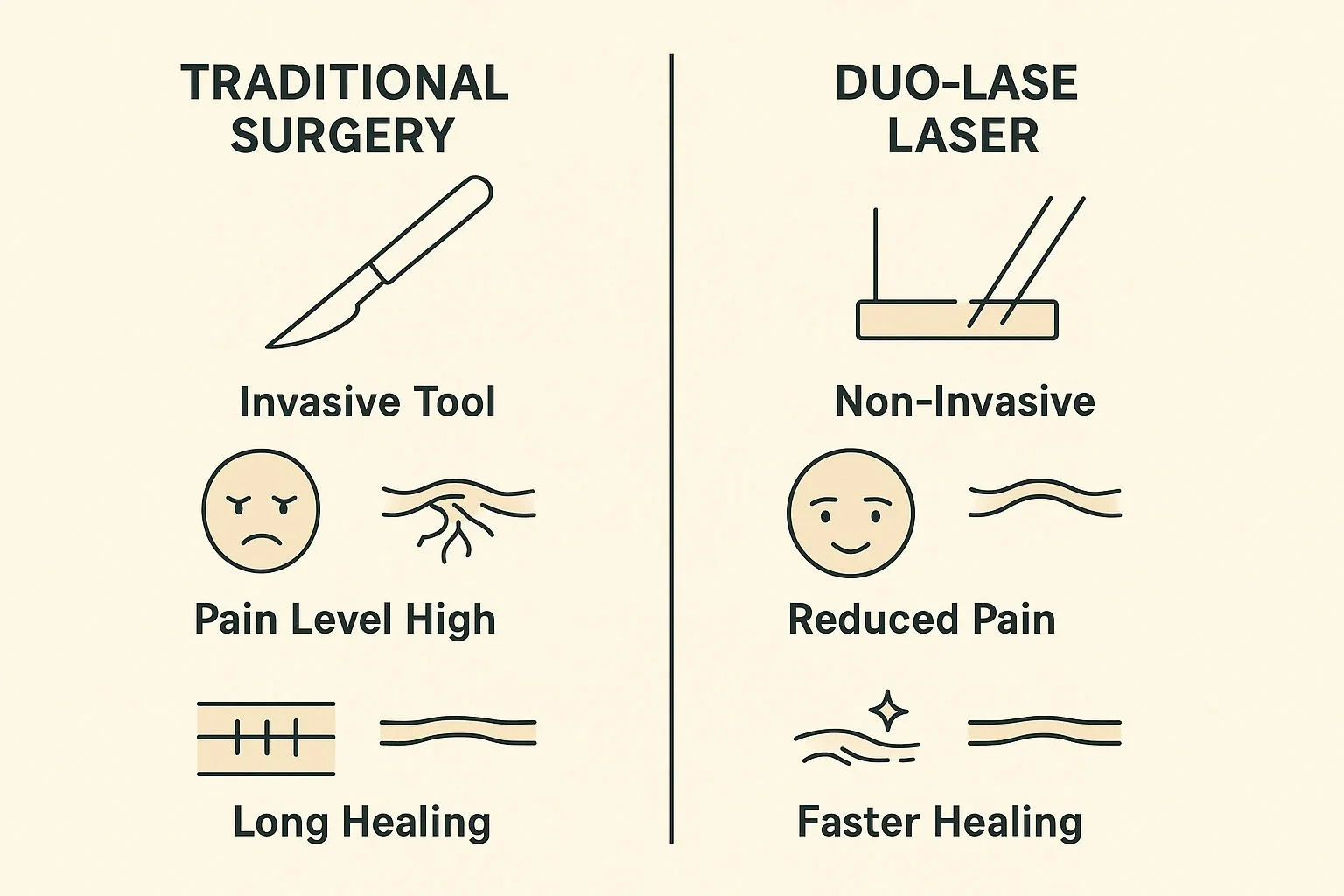
Comparing the Experience
If you are searching for a duo-lase periodontal treatment near me, it is likely because you want to avoid the downtime of surgery.
Traditional Surgery: Often requires multiple injections to numb the entire jaw. Once the anaesthetic wears off, the body reacts to the cuts and stitches with inflammation and pain, often requiring painkillers for days.
Duo-Lase™ Therapy: Because with Duo-Lase, gum surgery is not necessary and there is very little to no inflammation or pain. Many patients report that they can return to work immediately after the appointment without the "fat lip" feeling or the need for strong painkillers. Duo-Lase™ is very non-invasive and aesthesia is only used if the gum is extremely inflamed at the beginning of the treatment.
Addressing the Fear: Is "No-Needle" Guaranteed?
It is important to maintain realistic expectations. While the goal of Duo-Lase™ is to minimise invasiveness, every patient has a unique pain threshold and level of infection.
For superficial pockets or early-stage gum disease, treatment can often be performed entirely without injections. For deeper, more complex cases, some anaesthesia might still be preferred to ensure you are perfectly relaxed. However, the amount of anaesthetic needed is typically much lower than traditional surgery.
The psychological benefit here is immense. Knowing that the procedure itself is non-invasive helps reduce the "anticipatory anxiety" that triggers a lower pain threshold. When you know you aren't going to be "cut," your body relaxes, making the entire experience smoother.
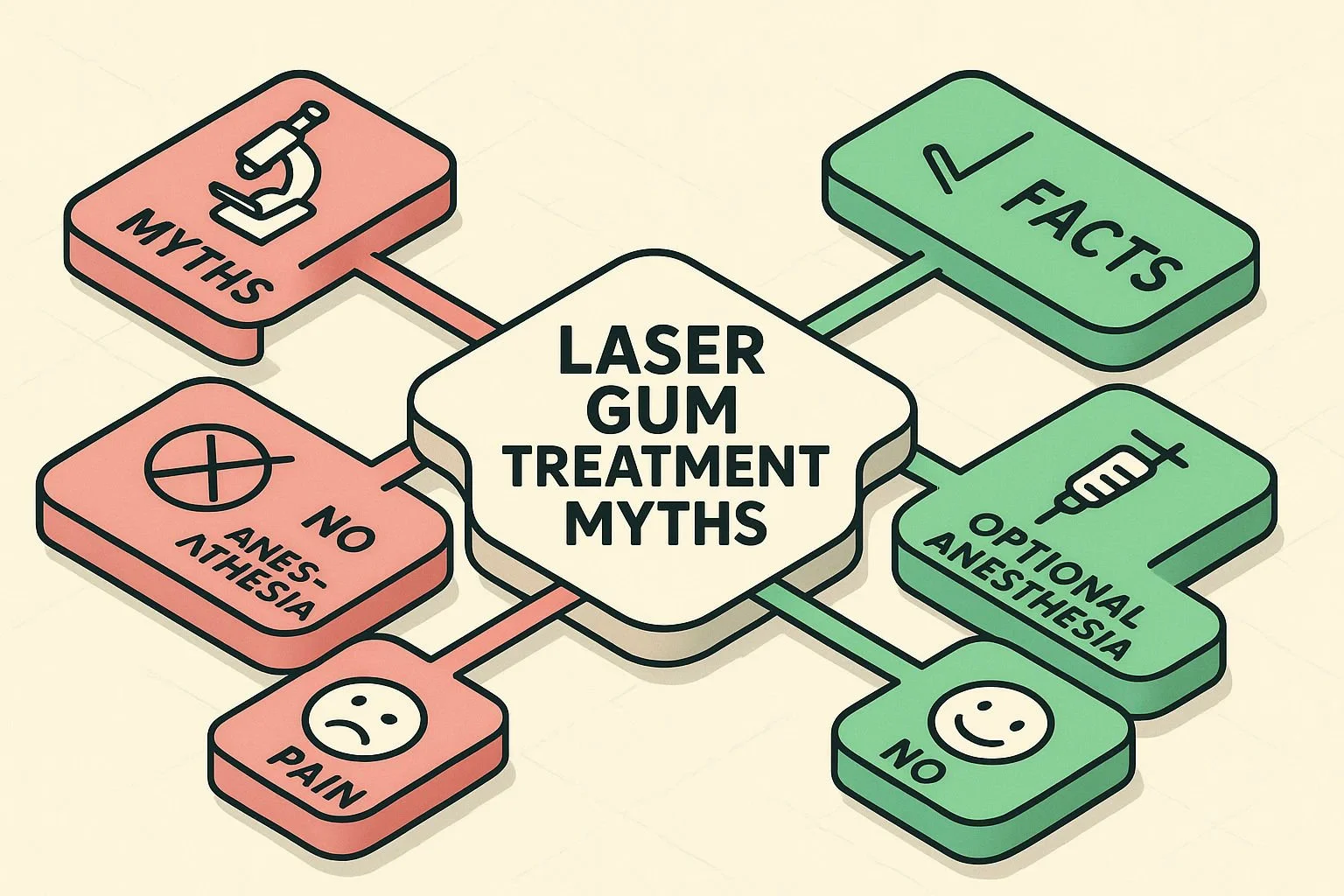
Questions to Ask Your Dental Professional
If you are considering laser therapy to avoid injections, the conversation with your provider is key. Here are specific questions to ask to ensure you are getting a true laser-assisted protocol:
"Do you use the laser for the entire decontamination process?" (Some clinics only use lasers as a finishing step, which may still require traditional numbing).
"Based on my specific inflammation levels, do you anticipate needing local anaesthetic?" (Get a personalized assessment before you sit in the chair).
Frequently Asked Questions
Is laser treatment completely pain-free?
Most patients describe the sensation as a warm pulse or slight tingling. While "pain-free" is subjective, it is universally described as far more comfortable than traditional scaling or surgery. If you are sensitive, a topical gel (numbing cream) is often all that is needed.
Will I be numb after the appointment?
Because Duo-Lase™ requires far less (or often no) injectable anaesthesia, you typically leave the practice without the heavy numbness that affects speech and eating. You can usually carry on with your day immediately.
Is this safe for my teeth?
Yes. The lasers used in the Duo-Lase™ protocol are highly selective. They are calibrated to target bacteria and diseased tissue specifically, leaving your healthy tooth enamel and roots untouched.
Why doesn't every dentist use this?
Duo-Lase™ technology requires significant investment in equipment and advanced training. It is currently available exclusively at The Behrens Dental Practice, where the team focuses on preserving natural teeth through non-invasive means.
The Path Forward
Fear of pain should never be the reason you risk losing your teeth. By understanding the science behind light energy and nerve interaction, you can see that dentistry has moved beyond the "numb and cut" approach of the past.
If you have been putting off treatment due to anxiety about needles, it may be time to explore how light-based therapy can offer a gentler, yet highly effective path to health.