
Can Smokers Get Laser Gum Treatment with Duo-Lase
Can Smokers Get Laser Gum Treatment? Candidacy & Realistic Expectations
You look in the mirror, and everything seems perfectly fine. Your gums are a normal shade of pink, and unlike the warning signs you see in toothpaste commercials, your gums don't bleed when you brush. Yet, your dentist has recently informed you that your teeth are shifting, you have advanced gum disease, and you might even need extractions or painful surgery.
If you are a smoker, this confusing scenario is incredibly common. It’s what periodontal experts refer to as the "Smoker's Paradox."
For years, the standard advice for smokers with severe gum disease was a frustrating ultimatum: quit smoking entirely, or undergo invasive flap surgery with high risks of failure. Today, advances in dental technology have changed the landscape. You don't have to choose between losing your natural teeth and enduring brutal, risky surgeries.
Let’s explore exactly why smoking hides the warning signs of gum disease, why traditional surgery is often a mismatch for your body's healing capabilities, and how dual-laser technology offers a specialized pathway forward.
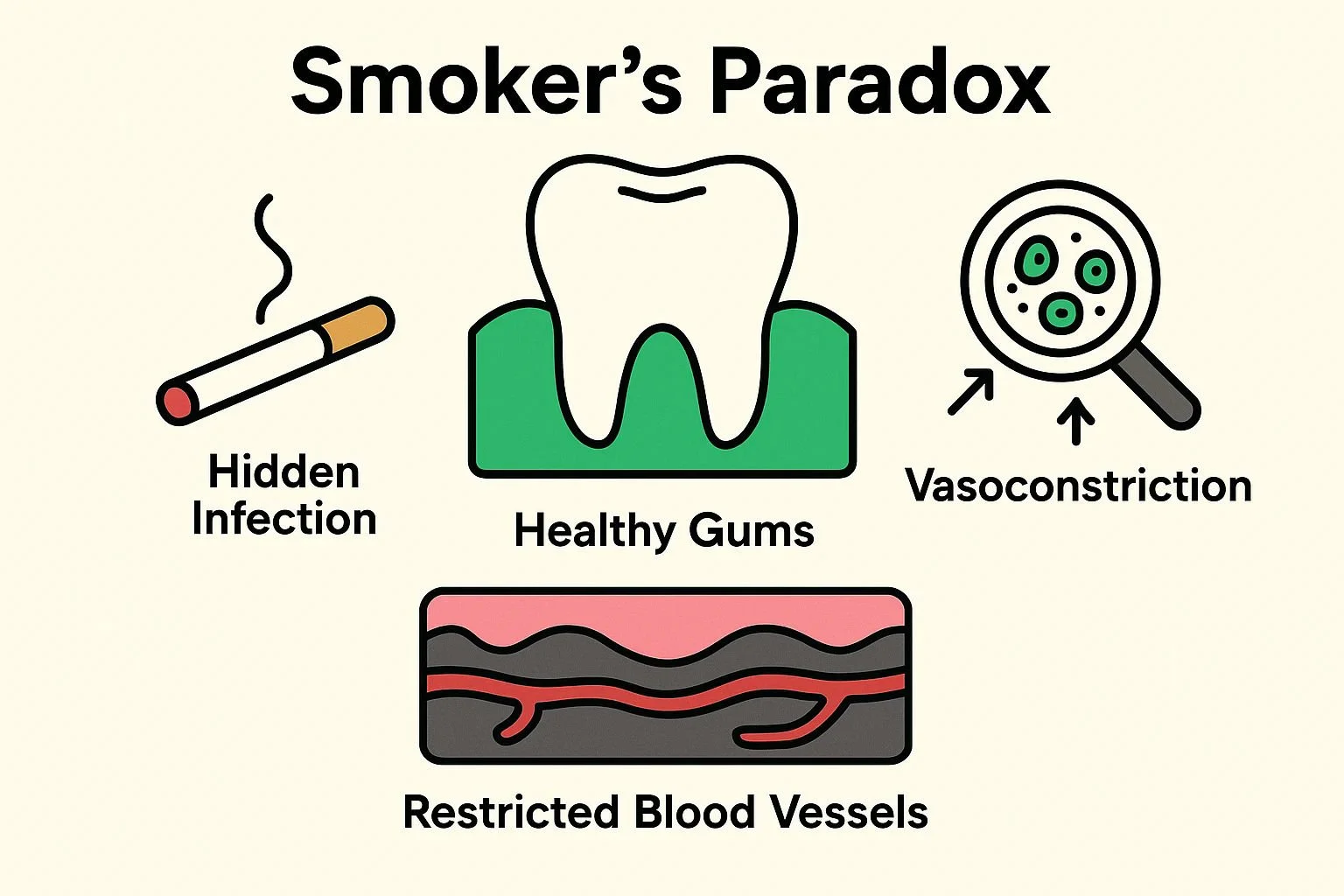
The Smoker’s Paradox: Why Your Gums Are Keeping Secrets
To understand why a smoker's mouth requires a different approach to treatment, we first have to understand the illusion of healthy gums.
When a non-smoker develops gum disease, their body sends a loud, visible alarm: inflammation, swelling, and bleeding. This happens because the body is rushing white blood cells and oxygen to the gums to fight off bacterial infection.
Smoking, however, causes a biological reaction called vasoconstriction. Nicotine effectively squeezes and shrinks your blood vessels. Because blood cannot flow freely to your gums, the bleeding and redness never happen. Your body's alarm system is completely muted.
Beneath the surface, however, the lack of oxygen creates the perfect breeding ground for highly aggressive bacteria. These bacteria silently eat away at the bone supporting your teeth, accelerating the gum disease progression stages without you ever feeling a thing until your teeth begin to loosen.
Why Traditional Gum Surgery is a High-Risk Gamble for Smokers
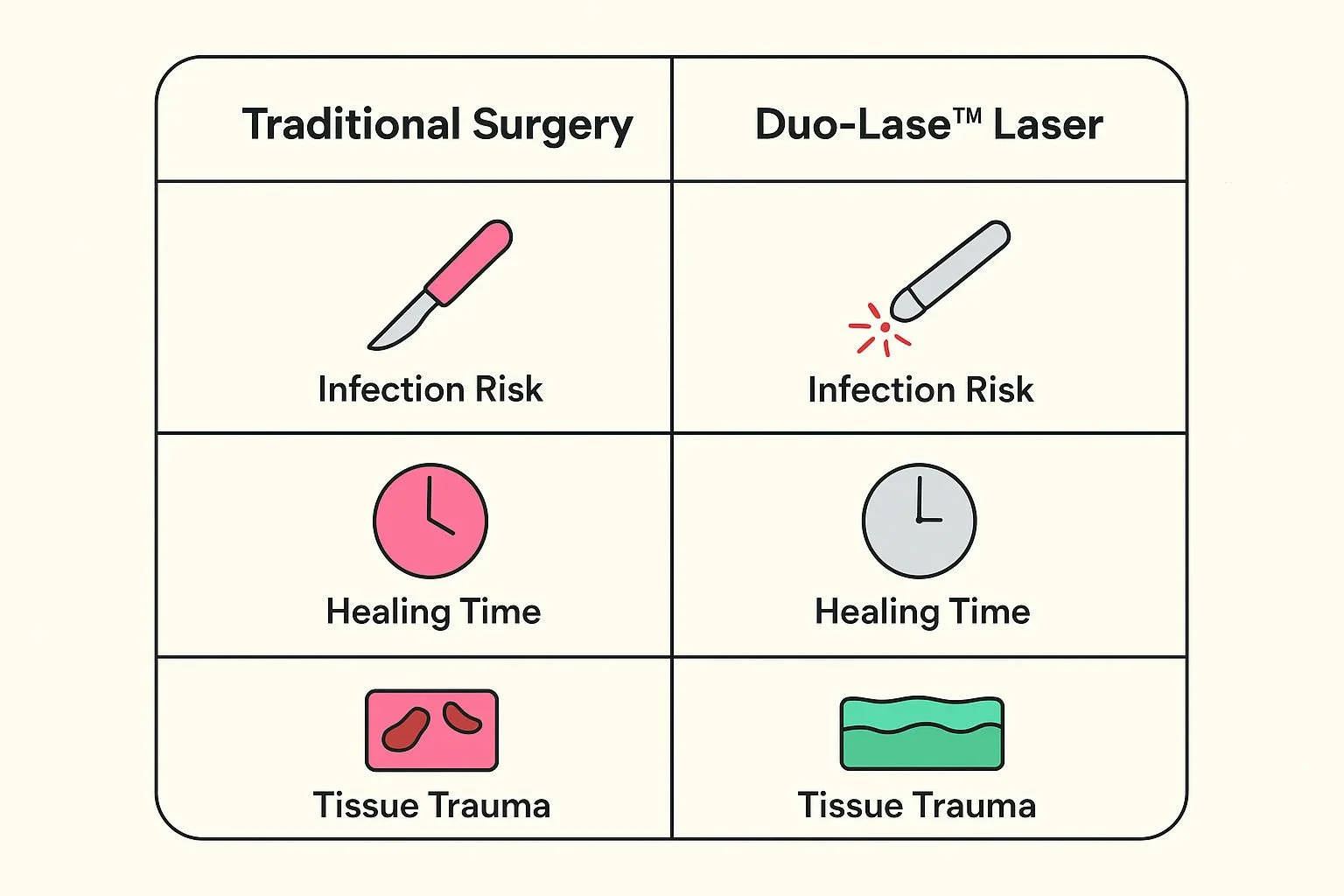
When periodontal disease reaches an advanced stage, the traditional medical approach is "flap surgery." This involves a dentist cutting the gum tissue, pulling it back to scrape the bacteria off the roots, and then stitching the gums tightly back together.
Here is the problem: healing from surgical trauma requires a massive, robust blood supply.
Because a smoker's blood vessels are restricted, the gums simply do not get the oxygen and nutrients needed to survive the trauma of being cut and stitched. For a smoker, traditional surgery carries a high risk of severe infection, intense pain, and tissue necrosis (where the gum tissue dies and falls away).
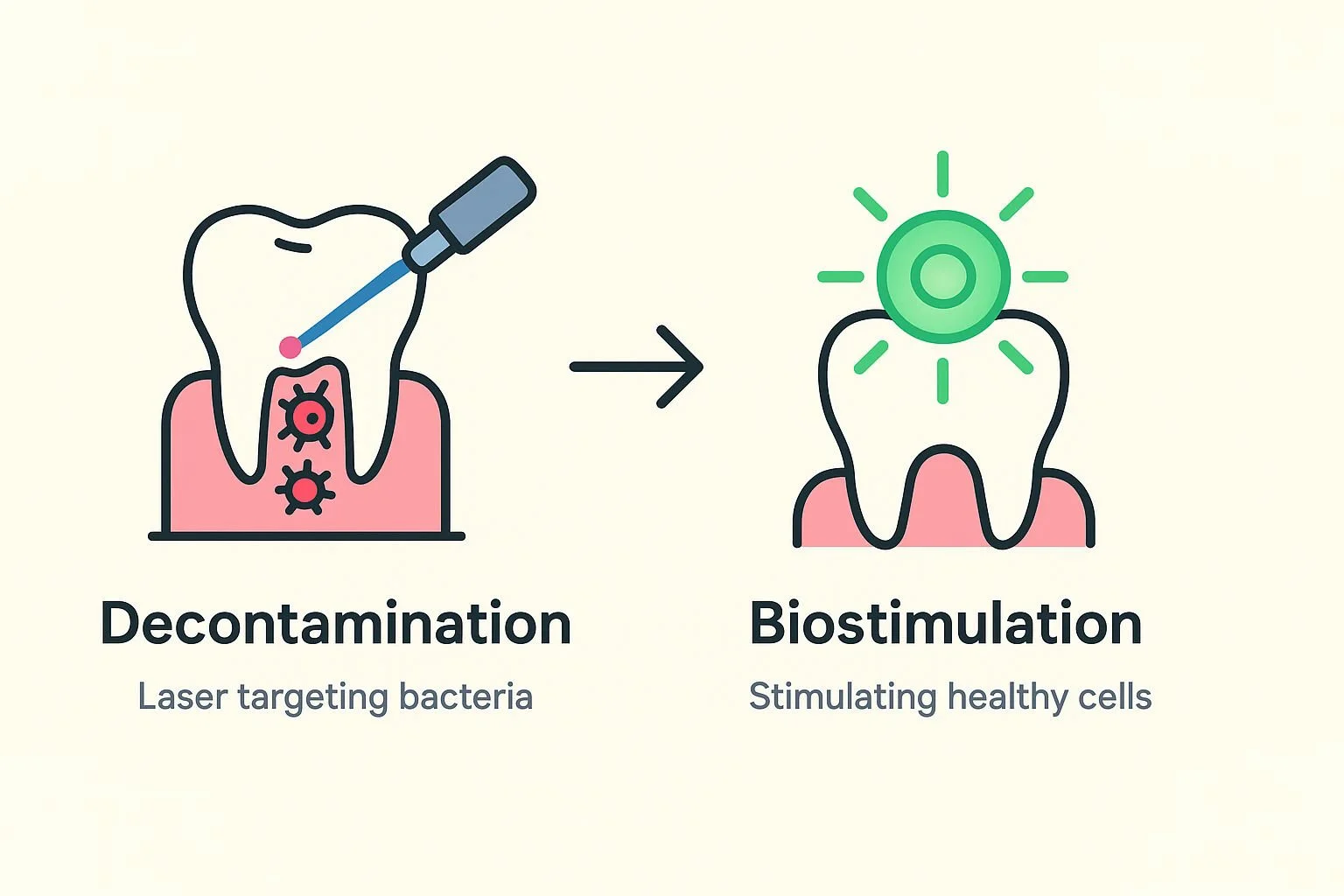
The Biological Bridge: How Duo-Lase™ Works When Your Body Can’t Do It Alone
Because a smoker's immune system and healing capabilities are compromised, they need a treatment that adds healing elements to the body rather than causing physical trauma that the body has to recover from.
This is exactly why duo lase treatment at The Behrens Dental Practice in London was developed. It is a non-invasive, dual-laser protocol that uses light energy to do what a scalpel cannot.
Instead of cutting the gums to reach the infection, Duo-Lase™ uses two specific lasers to eliminate bacteria and jumpstart the cellular healing process from the inside out.
Step 1: Photodynamic Pocket Decontamination (Nd:YAG Laser)
First, a highly specialized Nd:YAG laser is carefully passed between the gum and the tooth. This process, known as photodynamic pocket decontamination, specifically targets and vaporizes the dark, aggressive bacteria that thrive in a smoker's mouth.
Crucially, the Nd:YAG laser also acts as a powerful anti-inflammatory for the gum tissue. As it cleanses the area, it supports the creation of a brand-new cell layer on the root surface—including specialized cells called cementoblasts—which actively help close the deep periodontal pockets around your teeth.
Step 2: Biostimulation and Healing (Diode Laser)
Once the bacteria are cleared, the second phase begins using a Diode laser. Think of this laser as a biological battery charger. It provides "biostimulation" to the surrounding tissues, effectively waking up sleeping cells and driving collagen production in both the bone and the gum.
Finally, this laser helps create a protective fibrin seal around the tooth. This seal acts like a natural, microscopic bandage, keeping new bacteria out while your gums reattach to the tooth structure in a sterile environment.
Candidacy and Realistic Expectations for Smokers
So, are you a candidate for this advanced laser therapy if you smoke? In most cases, absolutely.
At The Behrens Dental Practice, the first step is a Micro Perio Analysis. Periodontal experts don't just guess what's happening; they take a microbiological DNA test to identify the exact strains of bacteria causing your specific infection. This allows them to tailor the laser protocol precisely to you.
What to Expect During Treatment
If you are used to the idea of a single, agonizing surgical appointment, Duo-Lase™ is a completely different experience. Because smokers have a tougher time fighting off bacteria, a sustained approach is required.
Patients undergo an average of 10 short laser sessions, which can be scheduled up to 3 times per week. Because the procedure is so gentle, it is usually performed completely without anaesthetic. There is absolutely zero downtime; you can walk out of the clinic and immediately go back to your day, benefiting from fast healing periodontal care that doesn't disrupt your life.
Realistic Success Rates
It is important to be medically honest: smoking will always place a ceiling on your body's ability to heal. Clinical data shows that smokers generally experience about 50% to 75% of the clinical tissue gains that non-smokers achieve after periodontal treatment.
However, looking at the big picture, this level of improvement is deeply life-changing. It is very often the difference between keeping your natural teeth for decades or losing them to extractions.
Frequently Asked Questions About Laser Gum Treatment for Smokers
Do I have to quit smoking completely to get treatment?
While reducing or completely stopping smoking will always yield the absolute best long-term results for your oral and systemic health, you will not be turned away for being a smoker. The goal is to treat your infection where you currently are, and the dual-laser protocol gives your compromised immune system the best possible fighting chance.
Does the laser treatment hurt?
One of the greatest benefits of the procedure is patient comfort. Because there is no cutting, no folding back of the gums, and no stitches, the treatment is incredibly gentle. The vast majority of patients require no anaesthetic whatsoever during their sessions.
Why does it take an average of 10 sessions?
Gum disease is a persistent, chronic bacterial infection—especially in a smoker's mouth, where oxygen is low. A single session isn't enough to permanently change the biological environment. By applying the two lasers over several sessions, we continuously remove repopulating bacteria while repeatedly stimulating the bone and tissue to regenerate and heal.
How soon can I return to work?
Immediately. Unlike traditional surgery that leaves you swollen, in pain, and restricted to a soft-food diet for days, this non-invasive approach has zero downtime.
Next Steps: Taking Control of Your Gum Health
Being a smoker does not mean you have to accept tooth loss as an inevitability. While nicotine undeniably masks the symptoms and complicates traditional healing, modern dental technology offers a sophisticated workaround.
By utilizing photodynamic pocket decontamination and targeted biostimulation, your body can be given the tools it needs to stop the progression of disease, close deep gum pockets, and save your natural smile.
If you have been told your teeth need to be extracted, or if you are avoiding treatment because you fear invasive surgery, it is time to explore a modern alternative. Learn more about how duolase works, or reach out to the team at The Behrens Dental Practice to schedule a comprehensive Micro Perio Analysis. Your natural teeth are worth saving, and the path to health might be much gentler than you think.