
Alcohol stress and gum disease early risks explained
Alcohol, Stress & Gum Disease: Decoding the Hidden Risk Factors
Picture this: You’re a high-performing professional. You eat well, you hit the gym, you definitely don’t smoke, and you never skip your evening brushing and flossing routine. Yet, during your last dental check-up, you were told your gums are receding and bleeding.
How is that possible?
For decades, the conversation around periodontal health has been dominated by one primary villain: tobacco. If you didn't smoke and you remembered to floss, you were supposedly safe. But as modern lifestyles evolve, a significant knowledge gap has emerged. Many health-conscious individuals are left wondering what is gum disease truly caused by when the traditional risk factors aren't present.
The answer lies in the biochemical synergy of our modern lifestyles. Beyond the toothbrush, factors like chronic stress, evening drinks, poor sleep, and nutritional gaps create a perfect storm that compromises your body’s natural ability to heal.
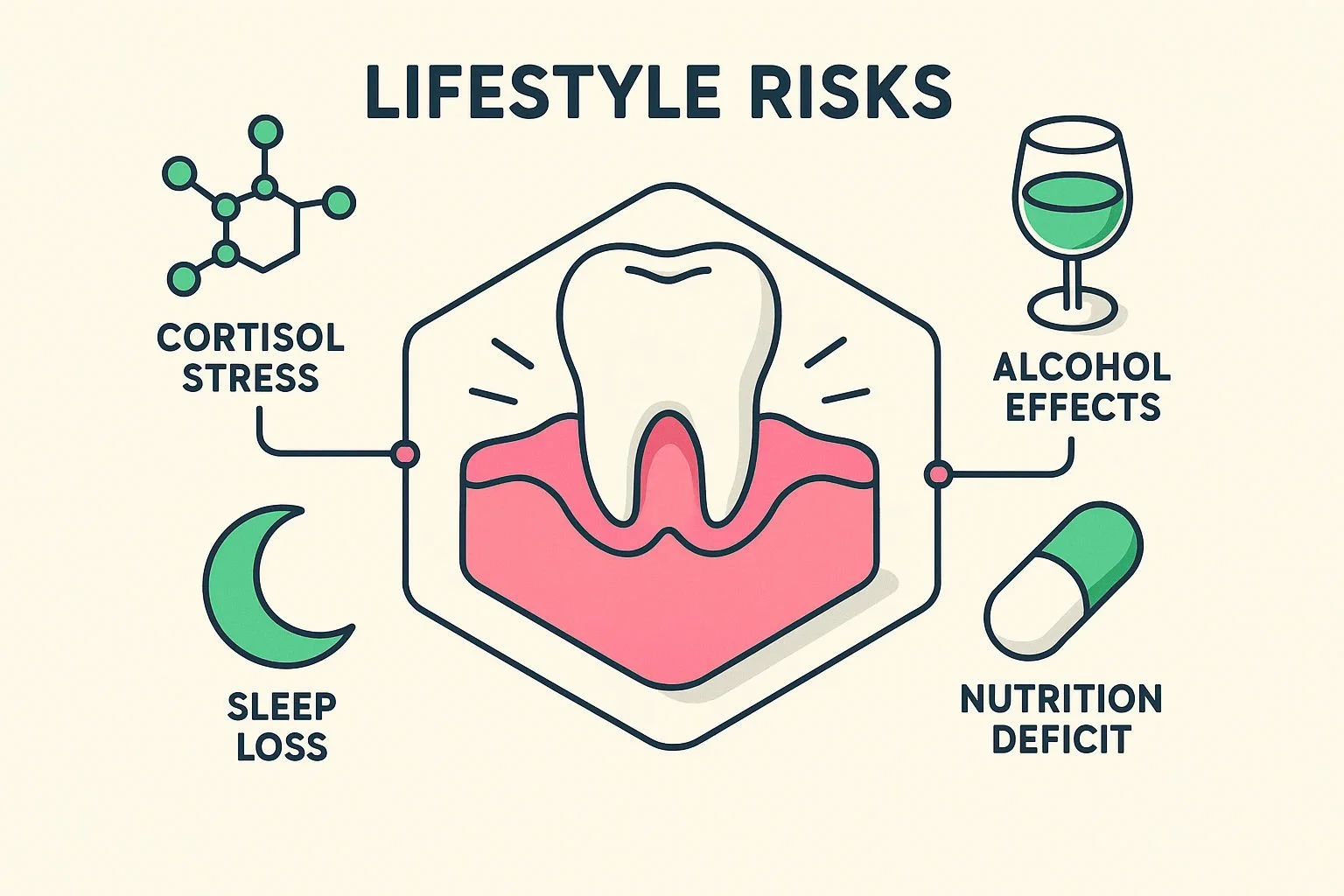
The New Risk Reality: Why "Not Smoking" Isn't Enough
Periodontal health is no longer just a story of oral hygiene; it is a profound bio-indicator of your total body wellness. City-dwelling professionals often experience what we might call "stress-accelerated periodontitis." It has become so prevalent that younger adults frequently ask how common is gum disease in 20s and 30s.
To understand why your gums might be struggling despite your best efforts, we have to look past the surface and examine the neuro-vessel-immune axis—how your nerves, stress hormones, and blood flow interact.
The Stress-Gum Axis: How Cortisol Starves Your Smile
When you are constantly under pressure, your body relies on the HPA (hypothalamic-pituitary-adrenal) axis, which pumps out cortisol to help you manage stress. In short bursts, cortisol is incredibly helpful and anti-inflammatory. However, when you are chronically stressed, this system fails.
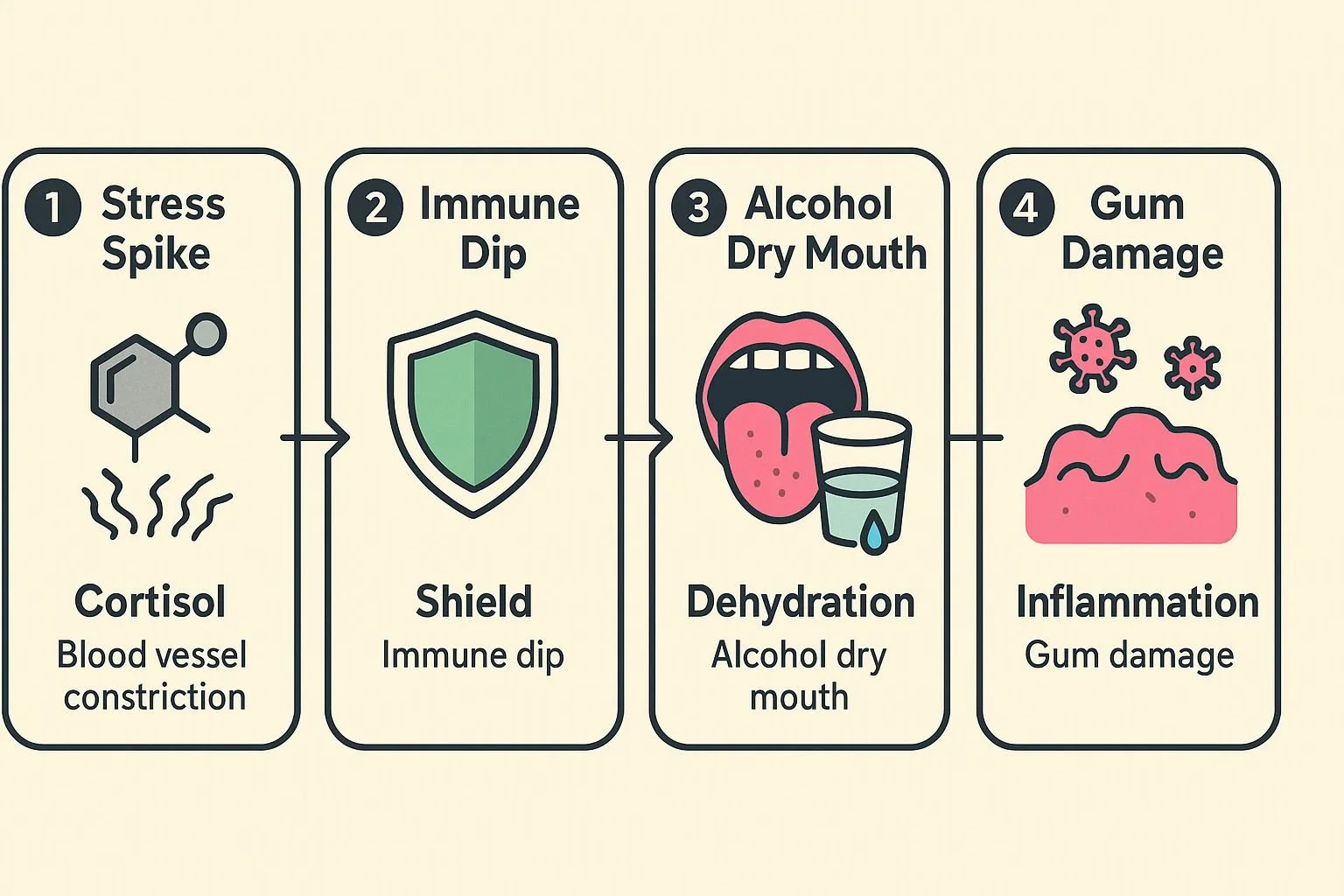
Here is the "Cortisol Countdown" that happens in your mouth:
Chronic Stress: Your body stays in a constant state of "fight or flight."
Vasoconstriction: Cortisol physically constricts your blood vessels.
Nutrient Starvation: Because the blood vessels in your gums are narrowed, vital oxygen, nutrients, and immune cells cannot reach the tissue—even if you have perfect flossing habits.
Immune-Blindness: Your immune system becomes essentially "blind" to the bacteria naturally occurring in your mouth.
Tissue Breakdown: Without immune defense and nutrients, the bacteria trigger inflammation, leading to bleeding, gum recession, and eventually bone loss.
The Alcohol Deception: Why Your Evening Glass Hurts Your Gums
There is a persistent myth that because alcohol is a disinfectant, consuming alcoholic beverages (or using alcohol-based mouth rinses) helps kill bad bacteria in the mouth. As a result, many people ask does mouthwash help gum disease if it contains harsh alcohols?
The biological reality is quite the opposite. Your gin and tonic is not cleaning your gums. In fact, alcohol consumption leads to two major periodontal problems:
Microbiome Dysbiosis: Your mouth relies on a delicate balance of good bacteria to keep disease-causing bacteria in check. Alcohol acts as an indiscriminate disruptor, killing off beneficial microbes and allowing destructive bacteria to thrive.
Xerostomia (Dry Mouth): Alcohol dehydrates the oral tissues and severely reduces saliva flow. Saliva is your mouth’s natural defense mechanism, packed with enzymes that wash away food particles and neutralize bacterial acids. When alcohol dries out your mouth, bacteria multiply exponentially.
The Sleep and Nutrition Connection
The impact of alcohol doesn't stop when you go to bed. The "nightcap" trap is that alcohol disrupts your natural sleep architecture. Why does this matter for your gums?
Your body does the vast majority of its tissue repair during the deepest phases of sleep, driven by peaks in growth hormone. When alcohol disrupts these peaks, your gums are robbed of their only daily opportunity to heal. Couple this with nutritional gaps—specifically deficiencies in Vitamin C (crucial for collagen production) and Vitamin D (vital for bone health and immune function)—and your body completely loses its capacity to fight infection and regenerate gum tissue.
Reclaiming Your Periodontal Health: The Healing Trio
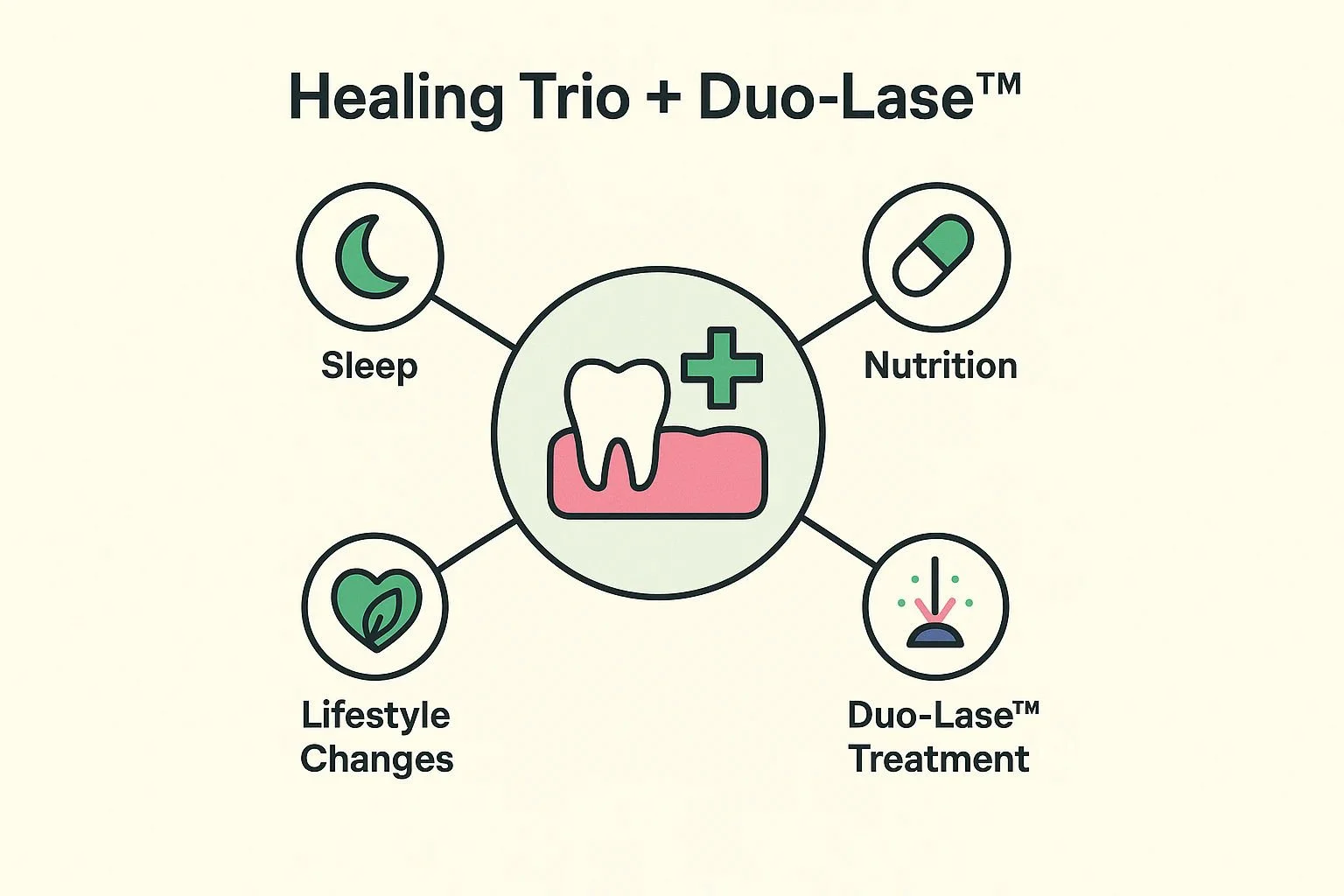
Understanding that gum disease is driven by bacteria but exacerbated by lifestyle allows us to change how we treat it. Healing requires a trio of interventions: addressing nutritional gaps, optimizing sleep, and utilizing advanced bio-stimulation to reset the compromised tissue.
At The Behrens Dental Practice in London, periodontal care begins with a Micro Perio Analysis. Periodontal experts don't just look at the physical symptoms (staging and grading); they conduct a microbiological DNA test to find out exactly which bacteria are causing the disease in your unique microbiome.
Based on these specific results, a personalized treatment plan is created. And for those seeking advanced, fast healing periodontal care, the answer lies in an innovative therapy designed to work alongside your lifestyle modifications.
How Duo-Lase™ Acts as a Biological Reset Button
When chronic stress and poor nutrition have compromised your body's healing capacity, traditional invasive surgeries (which involve cutting and sutures) can place even more stress on the tissue.
Instead, the duo lase treatment offers a non-invasive "reset button" for your gums. Using a proprietary dual-laser approach, this therapy targets the root cause of the disease while actively stimulating your body's cellular repair mechanisms.
Here is how the two lasers work together:
The Nd:YAG Laser: This laser focuses on "photodynamic pocket decontamination," safely passing through healthy tissue to specifically target and remove the dark-pigmented bacteria causing the disease. Furthermore, the Nd:YAG laser acts as a powerful anti-inflammatory for the gums. It supports the creation of a new cell layer on the root surface—including cementoblasts, which are essential cells that help close periodontal pockets. Finally, it creates a protective fibrin seal around the tooth, locking out new bacteria.
The Diode Laser: The second laser provides crucial bio-stimulation. It activates the cells to promote further healing and accelerates collagen production in both the bone and the gum tissue, effectively bypassing the healing fatigue caused by chronic stress.
Because the procedure does not involve scalpels or stitches, it is highly comfortable. Treatment is usually performed without anaesthetic, and there is absolutely no downtime. Patients typically require an average of 10 laser sessions (which can be done up to 3 times per week) to fully eliminate the bacteria and stimulate deep healing. For those looking into laser periodontal treatment london, it represents a paradigm shift in preserving natural teeth comfortably.
Your Periodontal Lifestyle Audit
Before your next dental visit, take a moment to assess your systemic risk factors. Ask yourself:
Am I experiencing high levels of daily stress that might be restricting blood flow to my extremities and gums?
Do I regularly consume alcohol in the evenings, potentially drying out my mouth overnight?
Am I waking up feeling unrefreshed, indicating disrupted deep sleep?
Is my diet lacking in whole foods rich in Vitamin C and D?
If you answered yes to several of these, your bleeding or receding gums are likely a biological cry for help, signaling systemic inflammation rather than just a missed flossing session.
Frequently Asked Questions (FAQ)
Can stress actually cause bone loss in the jaw?
Stress itself doesn't eat away at the bone, but chronic stress releases high levels of cortisol. This constricts blood vessels, weakens your immune system, and allows harmful oral bacteria to multiply unchecked. Over time, these bacteria and the resulting inflammation destroy the gum tissue and the underlying bone supporting your teeth.
Why are my gums sore after a night of drinking?
Alcohol is a diuretic that significantly reduces saliva production, leading to a dry mouth. Without saliva to wash away food particles and neutralize acids, bacteria thrive and irritate the gum tissue, leading to soreness and inflammation by morning.
Is it possible to have gum disease if I brush twice a day and don't smoke?
Absolutely. While excellent oral hygiene is crucial, periodontal disease is a bacterial infection influenced by systemic health. High stress, poor nutrition, mouth breathing, and compromised immune function can allow bacteria below the gumline to cause disease, regardless of your brushing habits.
How does laser bio-stimulation differ from traditional gum surgery?
Traditional surgery often involves cutting the gums, cleaning the roots, and using sutures, which requires significant recovery time. Laser bio-stimulation, like the Duo-Lase™ treatment, uses specific light wavelengths to non-invasively remove bacteria, reduce inflammation, and naturally stimulate collagen and bone regrowth without cutting, needles, or downtime.
Can receding gums grow back naturally?
Gum tissue that has receded due to bone loss cannot easily grow back on its own once the biological structure is gone. However, treatments that focus on bio-stimulation and cellular activation can help regenerate the necessary cells (like cementoblasts) and collagen, significantly improving the health, attachment, and appearance of the gums.
The Next Step in Your Health Journey
Understanding that your lifestyle impacts your periodontal health is the first step toward long-term wellness. You don't have to accept gum recession or the threat of tooth extraction as an inevitable part of aging or a high-stress career.
By combining targeted lifestyle modifications—like stress management, improved sleep hygiene, and proper nutrition—with advanced, biologically supportive treatments, you can stop periodontal disease in its tracks. If you are ready to explore a customized, non-invasive approach to saving your natural teeth and resetting your oral health, consider scheduling a comprehensive Micro Perio Analysis to discover exactly what your gums need to thrive.