
What Happens to Your Gums After Quitting Smoking
Quitting Smoking & Gum Health Recovery: What Happens to Your Gums Month by Month
You’ve just done something incredibly difficult and profoundly good for your health: you’ve quit smoking. But a few weeks into your journey, you brush your teeth and notice blood in the sink. Your gums might feel suddenly sore, tender, or look visibly swollen.
Panic sets in. Did quitting actually make your oral health worse?
Welcome to the "Cessation Paradox." It is incredibly common, highly stressful, and—believe it or not—one of the first genuine signs that your body is finally starting to heal.
For years, smoking has been playing a trick on your mouth. Understanding this trick is the first step toward reclaiming your oral health. Let's explore exactly what happens to your gums when you stop smoking, why the initial weeks can be alarming, and how you can use this critical window of time to permanently reverse periodontal damage.
The Invisible Damage: How Smoking "Silences" Your Gums
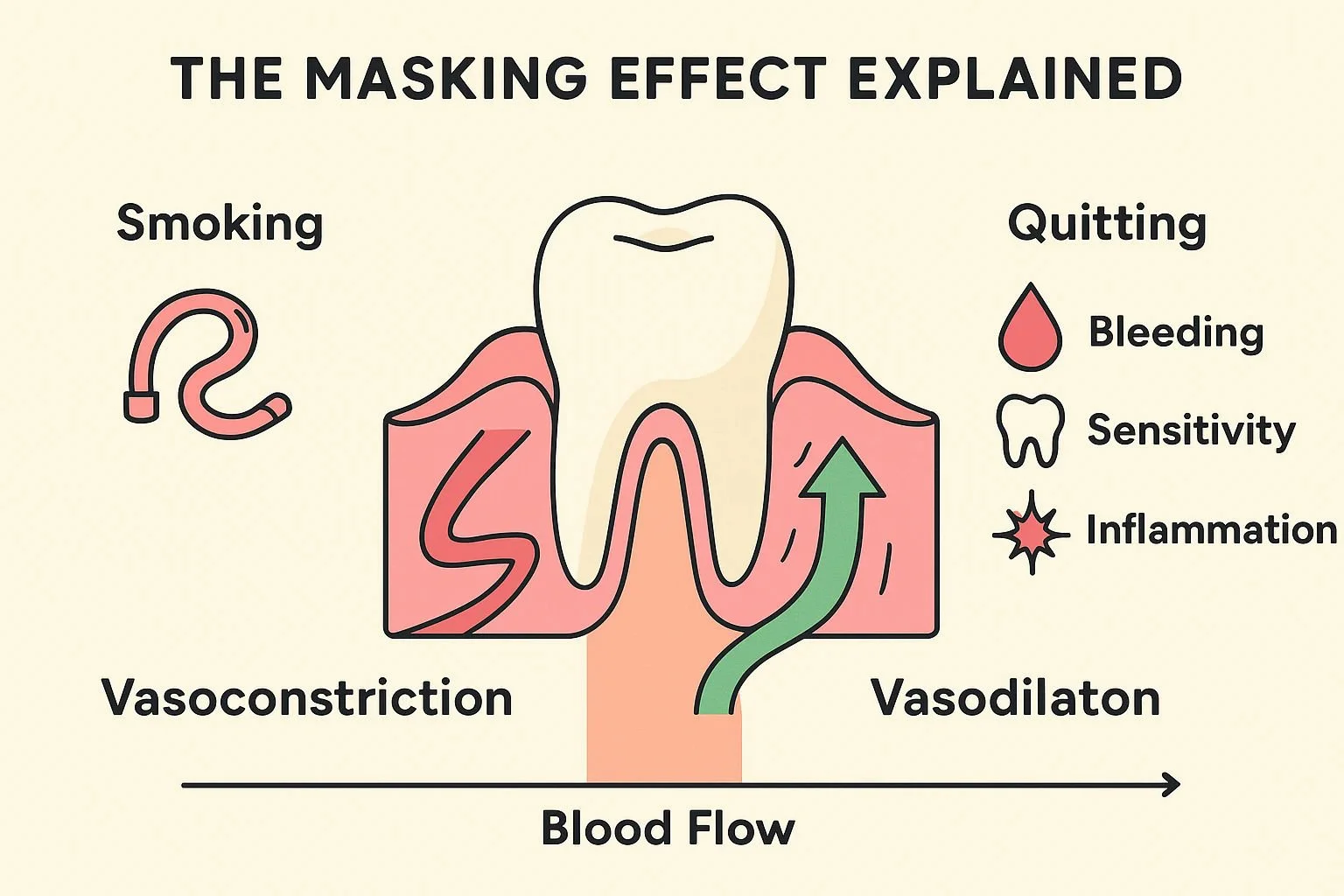
To understand your recovery, you first need to understand the masking effect of nicotine.
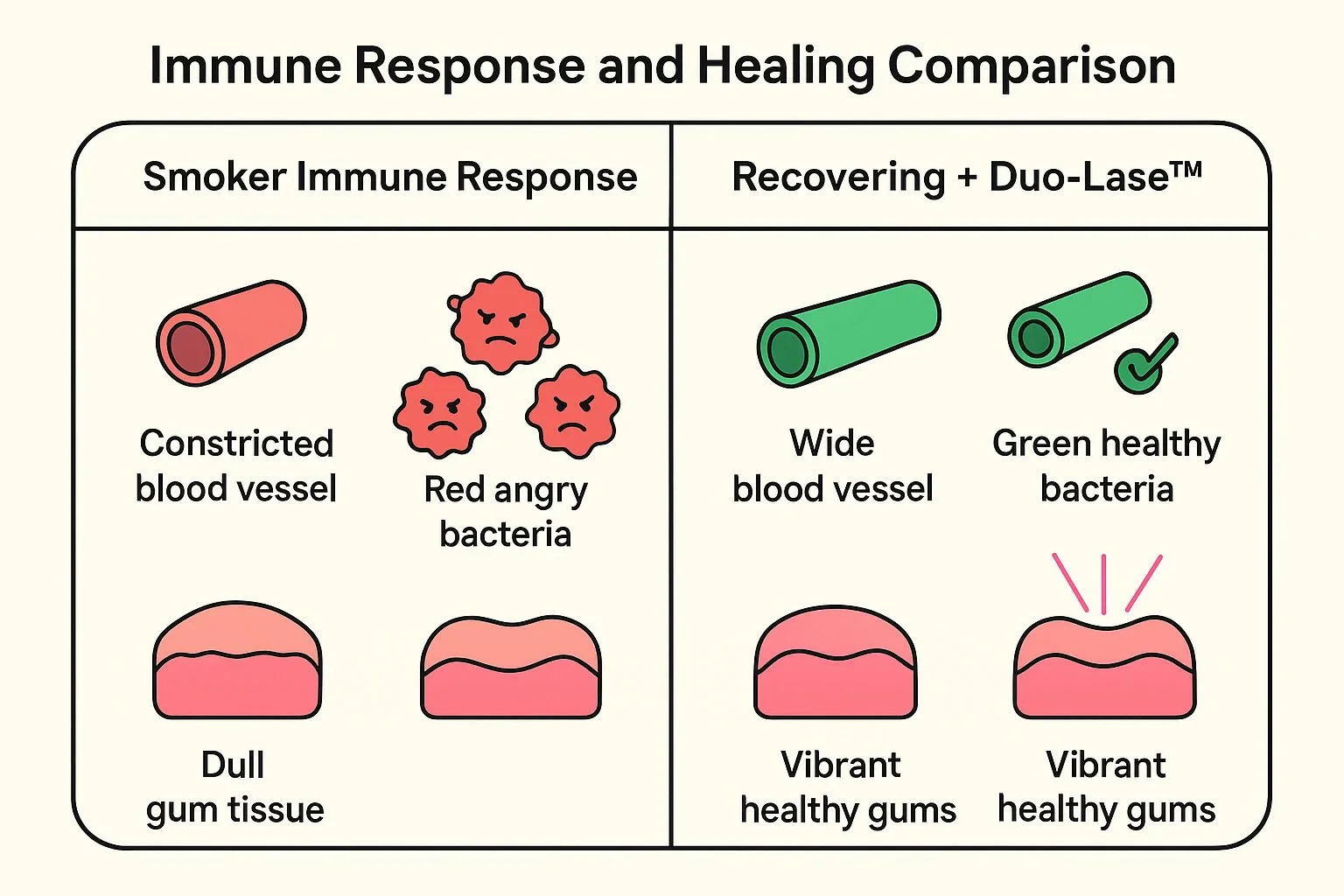
Nicotine is a potent vasoconstrictor, meaning it aggressively shrinks your blood vessels. Imagine a garden hose that has been tightly kinked. Water can barely trickle through. For years, nicotine has "kinked" the tiny blood vessels in your gums, restricting the flow of oxygen and nutrient-rich blood.
Because of this restricted blood flow, smokers rarely experience the classic warning signs of gum disease, like bleeding and swelling. The tissues simply don't have enough blood supply to bleed. This creates a dangerous illusion of health. While your gums look perfectly fine in the mirror, harmful bacteria are quietly multiplying beneath the surface, destroying tissue and bone and silently advancing through the periodontal disease stages.
When you quit smoking, you unkink the hose.
The Month-by-Month Gum Recovery Roadmap
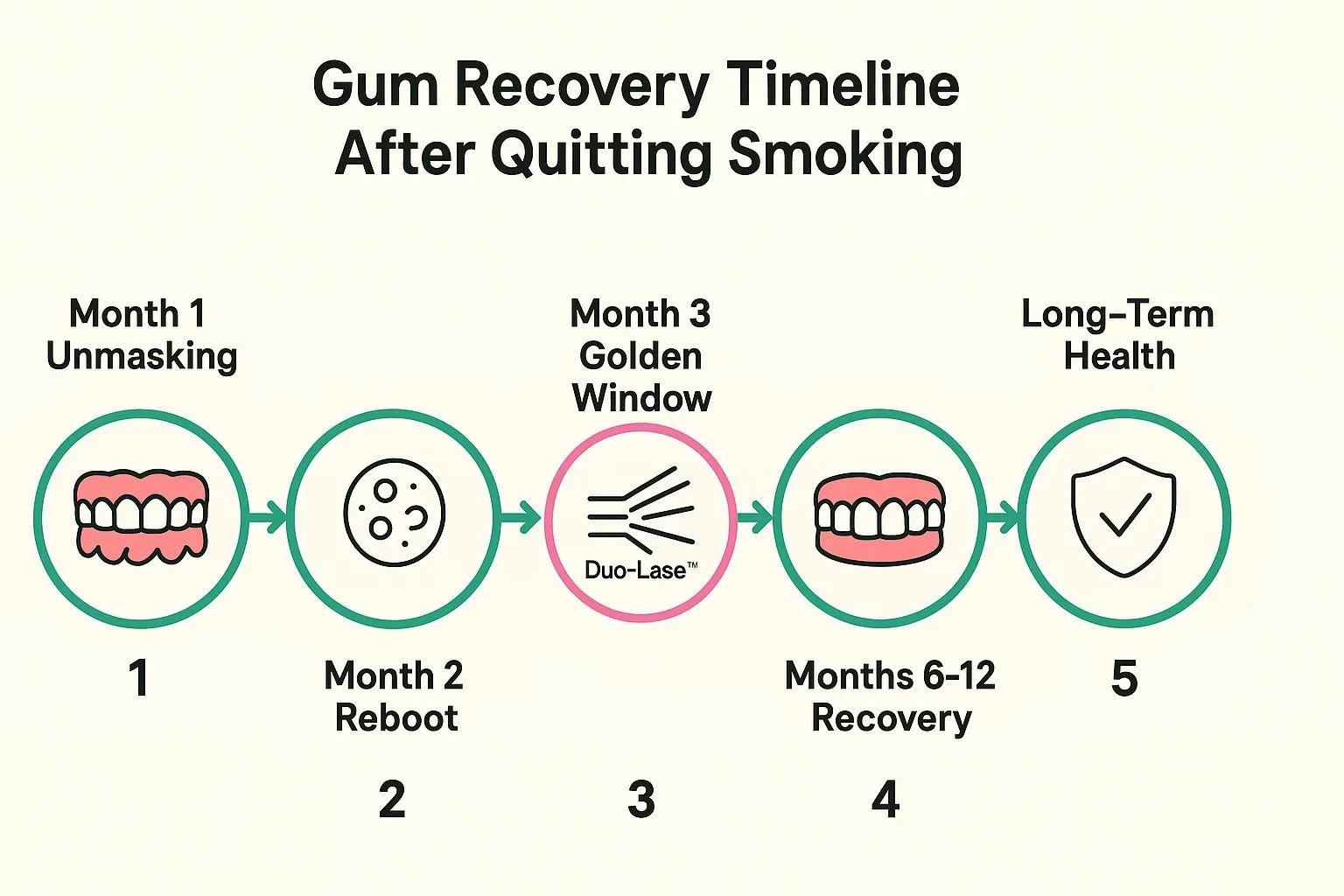
Quitting smoking doesn't instantly cure gum disease; rather, it allows your body’s natural alarm systems to finally turn back on. Here is what you can expect as your biology resets.
Month 1: The Unmasking (Days 1–30)
Within just days of your last cigarette, your blood vessels begin to dilate and return to their normal size. Blood rushes back into your gum tissues, bringing a surge of oxygen and immune cells.
Because your gums are suddenly flooded with blood—and because they are likely reacting to years of accumulated bacterial plaque—they will begin to bleed when you brush. They may swell and feel tender. This is the "unmasking" phase. While it can be alarming, this bleeding is actually a sign of life returning to your tissues. Your body is finally registering the bacterial infection that smoking kept hidden.
Month 2: The Biological Reboot (Days 30–60)
As you enter your second month smoke-free, your immune system begins to wake up from its nicotine-induced hibernation. It notices the massive "backlog" of bacteria hiding in the deep pockets around your teeth and starts fighting back.
However, your newly awakened immune system usually can't win this battle alone. The bacteria that cause periodontal disease have had years to build hardened fortresses (tartar) deep beneath the gumline.
🛑 The Bleeding Checkpoint
If your gums are still bleeding consistently past week 4 of quitting, it is no longer just an "adjustment" to blood flow. It is a clear signal of active gum disease that requires professional help before it progresses into moderate periodontitis.
Month 3: The Golden Window (Days 60–90)
Clinical research shows that around the 90-day mark, a former smoker's immune system and tissue healing capacity become significantly more robust. The initial inflammatory shock has settled, and your body is primed for repair.
This is the "Golden Window"—the absolute best time to introduce non-surgical intervention to clear out the bacterial backlog and help your gums reattach to your teeth.
Why Your Reawakened Immune System Needs a Helping Hand
Many former smokers assume that if they just brush harder and floss more, their newly oxygenated gums will heal on their own. Unfortunately, toothbrush bristles cannot reach the deep periodontal pockets where the most destructive bacteria live.
To truly recover, you need a treatment that identifies the exact cause of your disease and targets it without causing further trauma to your healing gums. This is where periodontal experts with a special interest in laser therapies come in.
At The Behrens Dental Practice, we don't just guess what's happening beneath your gums; we test for it. The journey begins with a Micro Perio Analysis. We perform a microbiological DNA test to identify the exact strains of bacteria causing your disease. Combined with careful staging and grading of your current gum health, this allows us to create a highly precise, personalised treatment plan.
For patients recovering from smoking-induced gum damage, duolase therapy offers a remarkably gentle and effective path forward.
How Duo-Lase™ Transforms the Recovery Process
Unlike traditional dental surgeries that involve cutting the gums, or a standard full mouth debridement that may leave deep bacteria behind, Duo-Lase is a non-invasive treatment that uses two distinct lasers to heal the mouth from the inside out:
Photodynamic Pocket Decontamination: First, an Nd:YAG laser is used to precisely target and remove the specific bacteria identified in your DNA test. This laser also acts as a powerful anti-inflammatory for your gums, calming the sudden swelling you experience after quitting smoking. Crucially, it supports the creation of a new cell layer on the root surface—including cementoblasts—which are essential for closing the deep pockets around your teeth.
Biostimulation and Sealing: Next, a diode laser is applied. This laser provides biostimulation, promoting collagen production in both the bone and the gum tissue to accelerate healing. Finally, the laser creates a secure seal around the tooth, locking out new bacteria and allowing your body to heal undisturbed.
Because the process works with your body's natural biology, patients typically require an average of 10 laser sessions (which can be comfortably completed up to 3 times per week). The treatment is so gentle it is usually performed without any anaesthetic, and there is zero downtime—meaning you can go right back to your day, celebrating your smoke-free life.
Months 6–12: Stabilisation and Long-Term Health
When you combine smoking cessation with the right laser therapy, the results over the following months are transformative. The active periodontal disease stops. The bleeding ceases entirely. In many cases, patients even see regrowth of bone that they thought was lost forever.
To ensure you stay on track, a follow-up microbiological test and a new round of staging and grading will confirm that your mouth is officially healthy. From there, your maintenance programme simply involves regular visits to the hygienist and maintaining the good home care habits you’ve built.
By taking action during your recovery window, you actively prevent the hidden damage of your smoking years from progressing into severe tooth loss or stage 3 gum disease.
Frequently Asked Questions
Is it normal for my teeth to feel slightly loose after quitting smoking?
Yes. As the inflammation sets in and the tissues swell with returning blood flow, your teeth might feel slightly mobile. As the gums heal and reattach—especially with the help of laser biostimulation—they will firm up again.
Can my gums grow back naturally after I quit?
While quitting smoking stops the ongoing chemical damage and improves blood flow, receding gums and lost bone cannot grow back on their own just through brushing. They require professional cellular stimulation, such as the biostimulation provided by the diode laser, to encourage new collagen production and pocket closure.
Will treating my gums right after quitting hurt?
If you opt for traditional surgery, recovery can be uncomfortable. However, with non-invasive laser therapies like Duo-Lase, treatment is incredibly comfortable. It is usually performed without anaesthetic and requires no downtime or recovery period.
Taking the Next Step in Your Recovery Journey
Quitting smoking is a massive victory. Don't let the sudden appearance of bleeding gums discourage you or trick you into thinking your health is declining. Your body is simply turning the lights back on and showing you what needs to be fixed.
Now that your immune system is waking up and your blood flow is restored, you are in the perfect position to reverse years of hidden damage. By pairing your incredible willpower with advanced, non-invasive laser therapy, you can secure a healthy, strong, and natural smile for decades to come.
If you've recently quit smoking and are experiencing the "unmasking" of gum sensitivity and bleeding, it’s time to find out exactly what’s happening beneath the surface. The sooner you understand your specific bacterial footprint, the sooner you can guide your newly recovered immune system toward complete oral health.