
Is Tooth Loss Inevitable with Gum Disease
Is Tooth Loss Inevitable with Gum Disease? Preserving Natural Teeth with Advanced Treatments
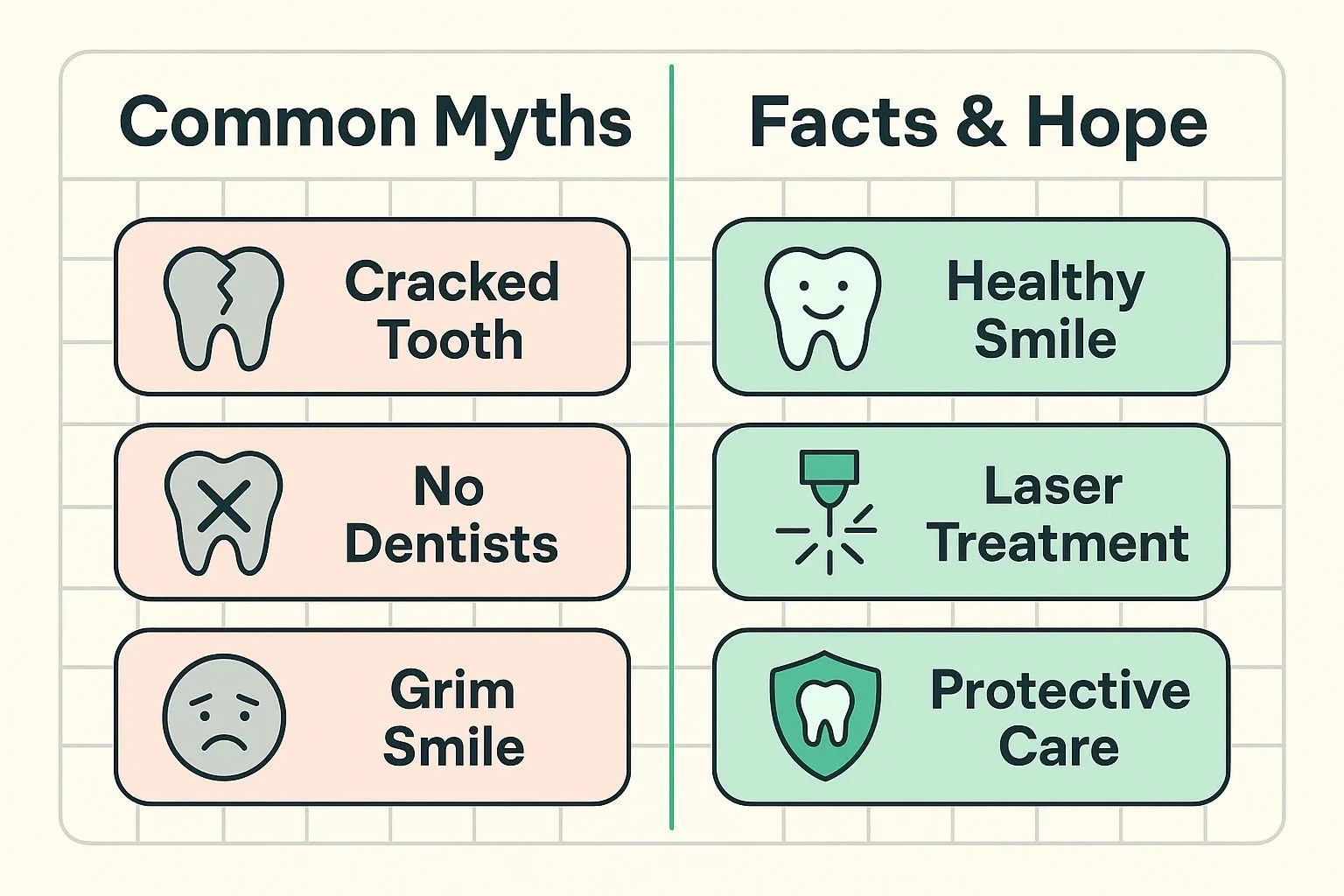
Sitting in a dental chair and hearing the words "periodontal disease" can feel like a heavy sentence. For many, the diagnosis immediately conjures images of loose teeth, painful surgeries, and the inevitable path toward extraction and dentures. It is a moment often defined by anxiety and a sense of powerlessness. However, the narrative that gum disease automatically equals tooth loss is one of the most persistent misunderstandings in dental health.
The reality of modern dentistry is far more hopeful than the stories we often tell ourselves. While untreated gum disease is indeed the leading cause of tooth loss in adults, a diagnosis is not a deadline. With the evolution of laser technology and microbiological testing, we can now halt infection and regenerate tissue in ways that were impossible just a decade ago. In fact, many fears patients harbor are based on outdated information; correcting these common gum disease myths is the first step toward reclaiming your oral health.
Understanding the Enemy: How Gum Disease Actually Works
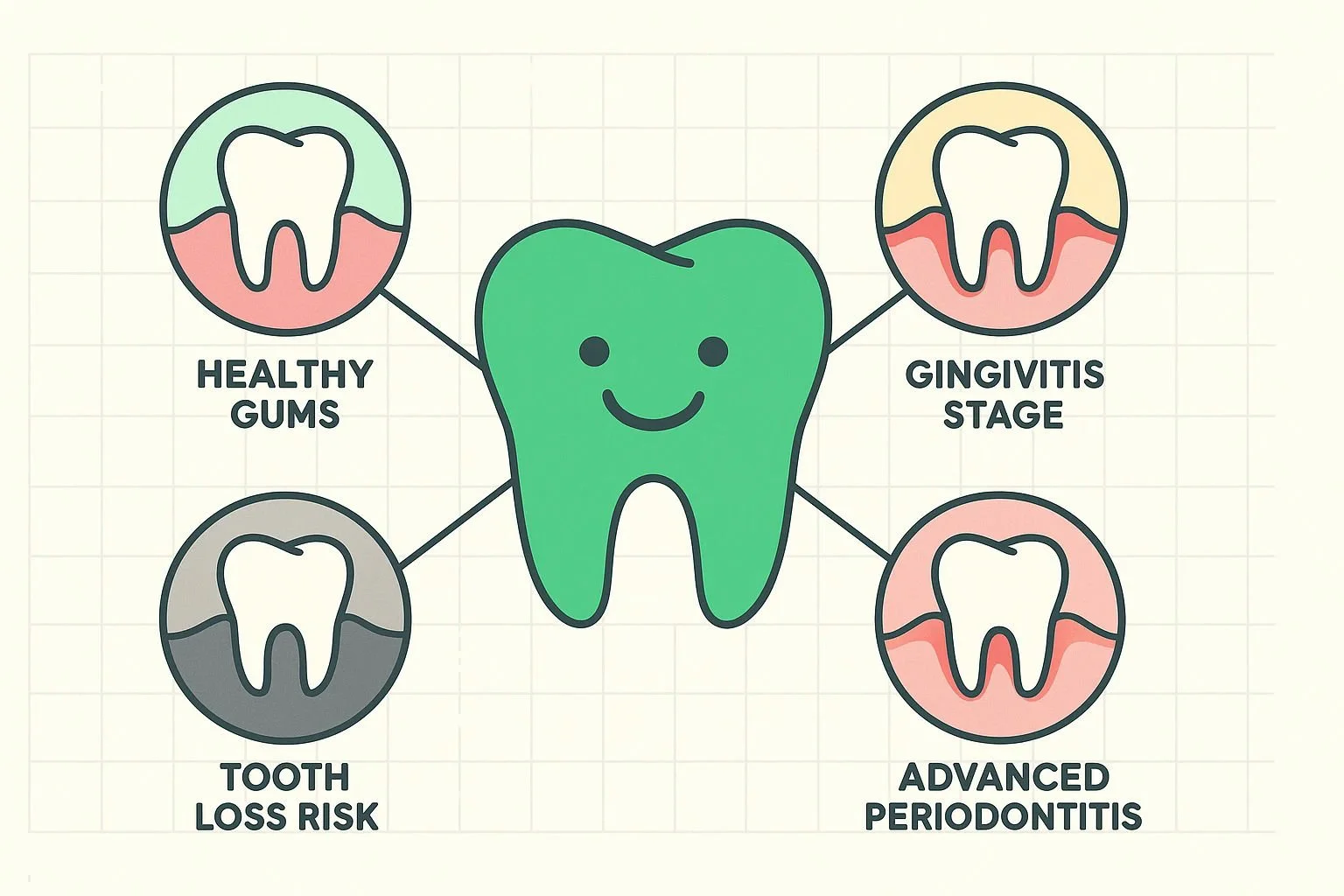
To understand why tooth loss isn't inevitable, we first need to understand why it happens. Many people believe teeth fall out because the gums simply "give up." In reality, tooth loss is the result of a biological battle taking place beneath the surface.
Think of gum disease like a splinter in your finger. If you leave a splinter in, your body creates redness, swelling, and heat to try to push the foreign object out. Gum disease triggers a similar inflammatory response. When specific harmful bacteria colonize below the gum line, your immune system launches an attack.
The problem is that this battle takes place on the battlefield of your jawbone. To distance itself from the infection, the bone actually retreats—it dissolves away from the bacteria. It isn't the bacteria eating your bone; it is your own body’s inflammation causing the bone to pull back to protect the rest of your system. This is why addressing the bacterial root cause is critical. Many patients ask, "can you catch gum disease?" While it is an infection driven by bacteria, it is the individual's immune response and oral environment that dictate how severe the bone loss becomes.
The Silent Progression
This process rarely happens overnight. It begins as gingivitis—reversible inflammation—and progresses to periodontitis, where the bone loss occurs. The deeper the bacteria travel, the deeper the "pockets" between the tooth and gum become, making them impossible to clean with a toothbrush or floss.
The "Point of No Return" is Further Than You Think
In traditional dentistry, once these pockets reached a certain depth or the teeth became mobile, extraction was often the primary recommendation. The logic was simple: remove the tooth to remove the infection.
However, with Duo-Lase , the philosophy is fundamentally different. The goal is to save the natural tooth whenever possible. Why? Because no implant or bridge can perfectly replicate the biological engineering of your own tooth and its connection to the jaw.
Even patients with advanced periodontitis, categorized as Stage 3 or Stage 4, often have viable options before extraction is necessary. The key lies in shifting from "managing" the disease to actually eliminating the specific pathogens causing it.
A New Era: Saving Teeth with Light and Logic
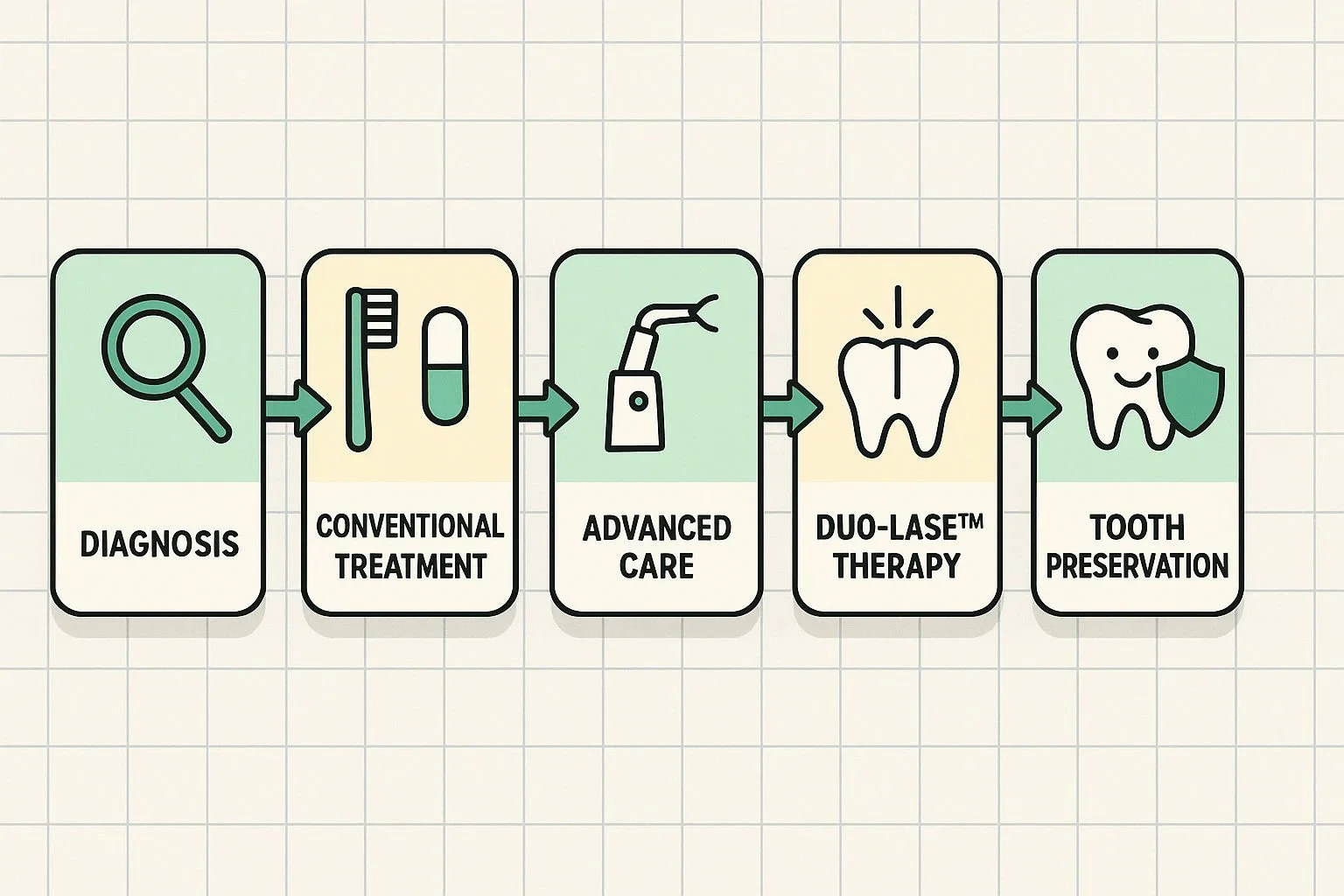
The reason we can now save teeth that were previously deemed "hopeless" is the integration of advanced diagnostics and laser technology. This approach, known as Duo-Lase, moves beyond the traditional "scrape and sew" methods of gum surgery.
Step 1: Micro Perio Analysis
You cannot fight an enemy you cannot see. Standard treatment often involves blind cleaning. Advanced care begins with a microbiological DNA test. By identifying exactly which bacteria are present, the periodontal experts at Behrens Dental can tailor the treatment plan. This takes the guesswork out of the equation.
Step 2: Photo-Dynamic Decontamination
This is where the first laser comes in. Instead of cutting the gums to reach the bacteria, a specific wavelength of laser light is used to target and vaporize the bacteria deep within the pockets. This effectively sterilizes the area without damaging the healthy tissue.
Step 3: Bio-Stimulation
Eliminating bacteria is only half the battle; the body must also heal. A second laser wavelength is used to stimulate the cells in the bone and gum tissue. This process, called bio-stimulation, energizes the mitochondria (the powerhouse of the cell) to accelerate healing, reduce inflammation, and in many cases, encourage the regeneration of bone that was thought to be lost.
Monitoring Success Through "Gum Pockets"
How do you know if the treatment is working and your teeth are safe? We measure success by the reduction of gum pockets.
A healthy mouth typically has pockets of 1 to 3 millimeters. In severe gum disease, these can deepen to 6, 7, or even 9 millimeters. When the bacteria are removed and the tissue is stimulated by the Duo-Lase™ protocol, the gums reattach to the teeth, and those numbers drop. As the pockets shrink, the tooth stabilizes, and the risk of loss diminishes significantly.
Frequently Asked Questions
Is the laser treatment painful?
Unlike traditional osseous surgery, which involves cutting and sutures, Duo-Lase™ is minimally invasive. Most patients report little to no discomfort during the procedure and require no downtime afterward.
Can loose teeth really tighten up again?
Yes. When the inflammation subsides and the infection is cleared, the periodontal ligament (the shock absorber holding the tooth) can heal and tighten. While not every tooth can be saved, the success rate for stabilizing mobile teeth with this method is exceptionally high.
Where can I find this treatment?
For patients searching for "duo laser periodontal treatment near me" in the UK, this proprietary therapy is exclusively available at Behrens Dental Practice in London.
Is it too late if I have been told I need extractions?
It is always worth seeking a second opinion, especially from a clinic equipped with microbiological testing and laser protocols. Many patients who were advised to have extractions elsewhere have successfully retained their natural teeth through this therapy.
Taking the Next Step
The fear of tooth loss is valid, but it shouldn't dictate your future. Gum disease is a manageable, treatable condition, not a guaranteed sentence of tooth extraction. By understanding the biological cause of the disease and utilizing technology that works with your body rather than against it, you can preserve your smile for years to come.
If you are concerned about bleeding gums, loose teeth, or a recent diagnosis, the most important action you can take is to seek information and professional assessment. Your natural teeth are precious—and they are worth fighting for.