
Financial Impact of Untreated Gum Disease on Health Costs
The Unseen Financial Burden: How Untreated Gum Disease Impacts Your Overall Health Budget
Imagine you own a beautiful historic home. One day, you notice a small, damp patch in the basement. It’s easy to ignore—after all, fixing the foundation sounds expensive, and the rest of the house looks fine. But over time, that small leak travels upwards. It rots the floorboards, warps the doorframes, and eventually compromises the electrical wiring. Suddenly, you aren’t just paying for a patch job; you’re paying for structural renovation and rewiring.
This is exactly how periodontal disease functions within the human body.
Most people view gum health as a cosmetic issue or a localized annoyance. We worry about the immediate cost of a dental visit, often asking, "Can I afford to treat this right now?" However, the more accurate financial question is, "Can I afford not to?"
Recent medical data suggests that your gums are not just holding your teeth in place—they are the gatekeepers of your systemic health and, by extension, your future financial stability. This guide explores the hidden "health tax" of untreated gum disease and how proactive "biological preservation" is one of the smartest investments you can make.
The "Systemic Leak":
How Bacteria Impact Your Wallet
To understand the financial cost, we first have to understand the biological mechanism. Gum disease (periodontitis) is essentially an open wound in the mouth, often equivalent in surface area to the size of your palm.
When you ignore signs like bleeding or sensitivity, you allow harmful bacteria to enter your bloodstream—a process known as bacterial translocation. This turns your mouth into a constant source of inflammation that spreads throughout your body. This isn't just a dental theory; it is a documented medical reality known as the oral-systemic link.
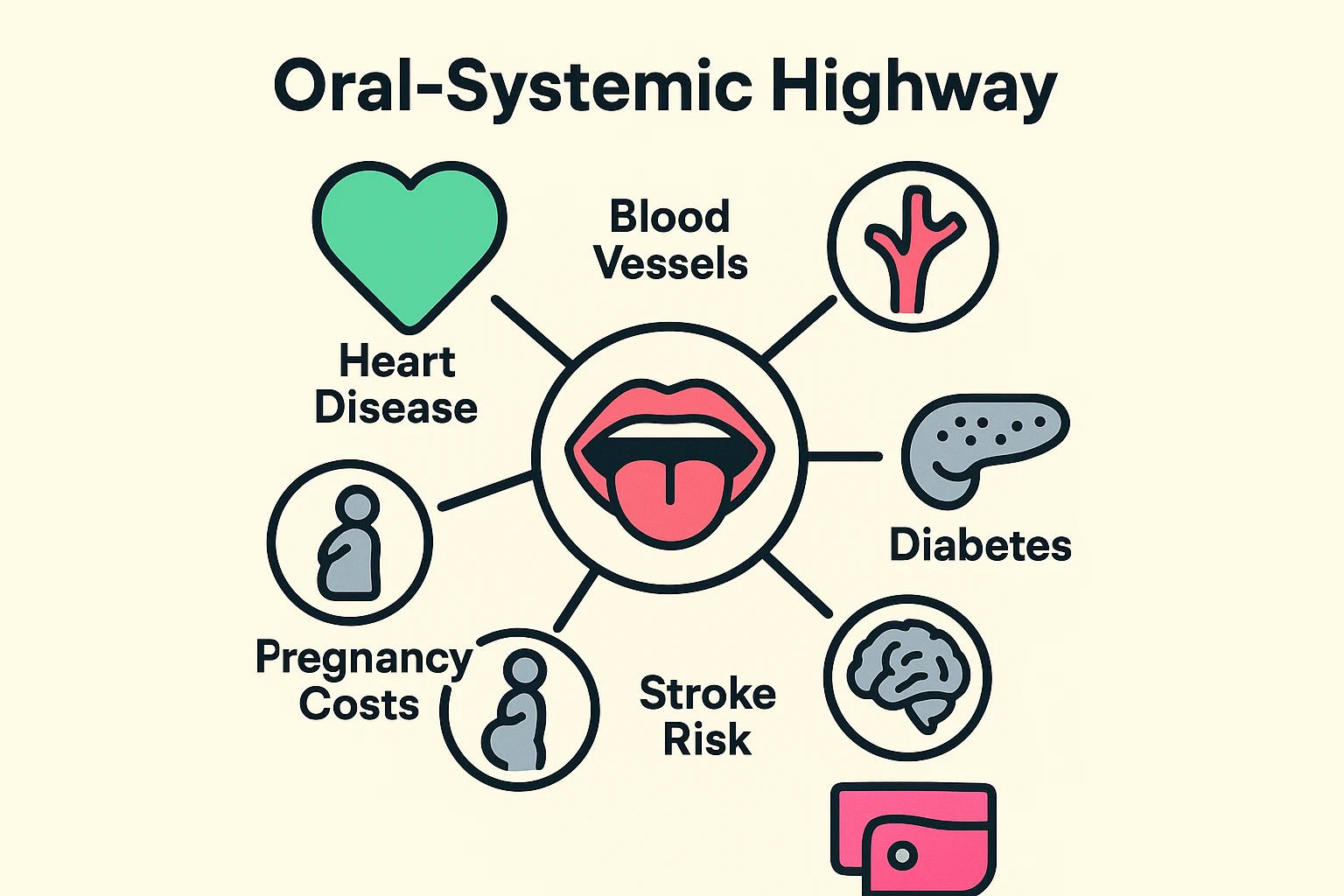
When this bacteria travels, it acts like a silent tax on your body's resources, contributing to serious conditions that require expensive, lifelong management.
The "Jeffcoat Effect": The Data on Cost Savings
The link between gum health and medical costs is so strong that researchers have put a price tag on it. A landmark study by Jeffcoat et al. analyzed insurance records to see what happens to medical costs when patients treat their gum disease. The results revealed a massive "Cost of Inaction."
Here is where the "health tax" becomes real money:
The Diabetes Dividend: For patients managing diabetes, treating periodontal disease resulted in a 40.2% reduction in annual medical costs. By reducing inflammation in the gums, the body becomes more efficient at managing blood sugar, reducing the need for insulin escalation and hospitalization.
The Stroke Safeguard: The study showed a 40.9% reduction in healthcare costs related to cerebral vascular disease (strokes) for those who maintained gum health.
The Pregnancy Premium: Severe gum disease increases the risk of preterm birth by up to 7 times. This not only endangers the health of the child but leads to significant neonatal care costs.
If you are researching gum disease linked to heart disease diabetes stroke alzheimer’s, you are already beginning to see the bigger picture: your mouth is the thermostat for your body's inflammation. Turning that thermostat down saves money everywhere else.
The Financial Domino Effect: Scaling vs. Surgery vs. Implants
Beyond systemic health, there is the direct cost of dental neglect. Many patients delay treatment because they fear the cost of a private consultation. However, in dentistry, the cost of repair compounds exponentially with every year of delay.
Think of your natural teeth as "Biological Capital." When you have them, they are free to maintain. Once you lose them, you enter the expensive world of "Prosthetic Renting."
Phase 1: The Maintenance Window (Low Cost)
At the earliest stages, treating what is gum disease usually involves professional hygiene visits and improved home care. The financial investment is minimal—comparable to servicing your car to prevent an engine breakdown.
Phase 2: The "Implant Trap" (High Cost)
If left untreated, gum disease attacks the bone. Eventually, teeth become mobile and may need extraction. This leads many to consider dental implants. While implants are a fantastic solution for missing teeth, they are roughly 10 times more expensive than saving a natural tooth.
Furthermore, implants are not "set and forget." They are susceptible to their own form of gum disease called peri-implantitis. If you don't address the underlying bacterial issue first, placing an implant is like building a new house on the same swampy land that sank the first one. Understanding peri implantitis stages is crucial before making that investment.
Duo-Lase™: Investing in Biological Preservation
This brings us to the modern approach to periodontal care. Historically, if gum disease was advanced, the only option was invasive surgery—cutting the gums, stitching them back, and dealing with a long, painful recovery. This "cut and suture" approach often scares patients away from seeking help, worsening their financial and health outlook.
With Duo-Lase™, the philosophy is different. The goal is Biological Preservation—saving your natural teeth and bone structure whenever possible to avoid the high costs of extraction and replacement.
This is achieved through Duo-Lase™, a protocol that combines diagnostic precision with minimally invasive laser technology.
The Technology of Wealth Protection
Instead of simply cleaning the teeth, the Duo-Lase™ process begins with a Micro Perio Analysis. This includes a DNA test to identify exactly which bacteria are causing your disease. It’s the difference between guessing why your house is leaking and using a thermal camera to find the source.
Once the bacteria are identified, the dual-laser approach is used:
Photo-Dynamic Pocket Decontamination: Eliminates the specific bacteria causing the inflammation.
Bio-Stimulation: Encourages your body to regenerate tissue and heal naturally.
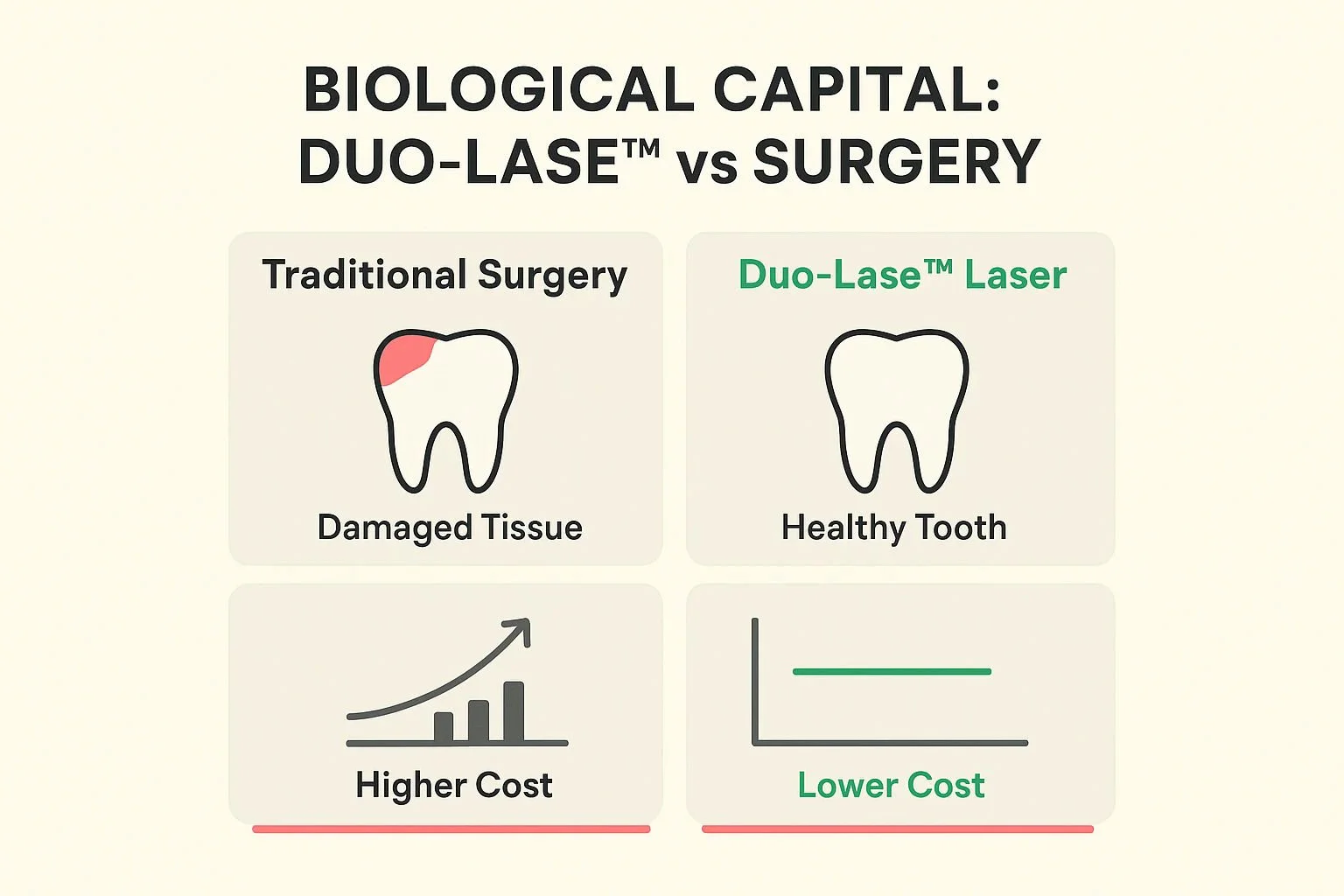
By choosing Duo-Lase™ treatment, you are effectively buying back your oral health without the downtime of surgery, preserving your natural biological capital.
The Cost of Inaction Calculator
To visualize the true ROI (Return on Investment) of periodontal care, we must look at the "Lifetime Health Budget."
The Proactive Path: Investing in Duo-Lase™ therapy + Regular Hygiene.
Result: Retention of natural teeth, lower systemic inflammation, reduced risk of diabetes complications.
The Reactive Path: Ignoring symptoms + Emergency Extractions + Implants + Systemic Management.
Result: Loss of bone, high cost of restorative dentistry (implants/dentures), higher lifetime medical costs for associated conditions.
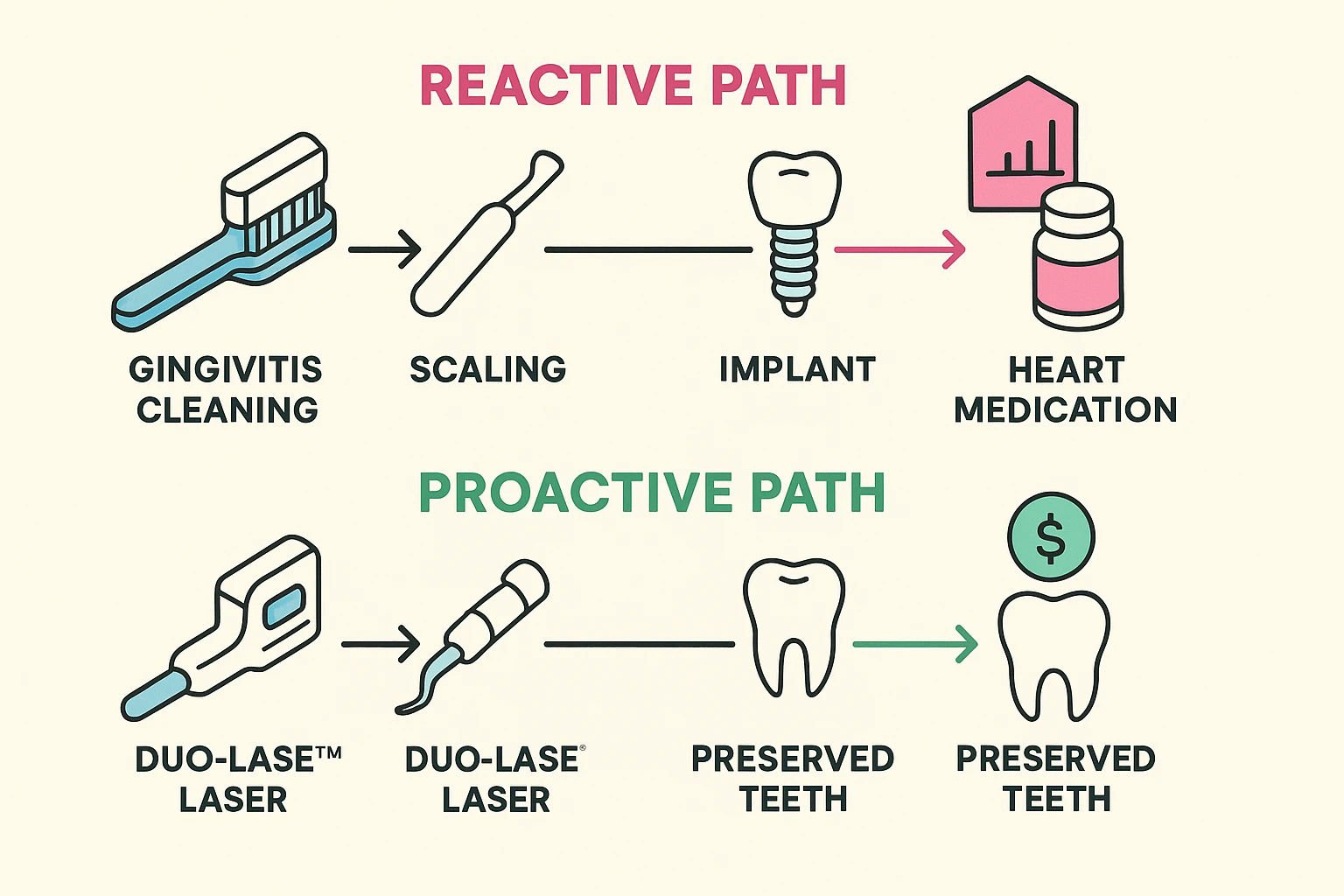
It is rarely the cost of the laser treatment that breaks the bank; it is the staggering cost of the medical and dental interventions required when we wait too long. If you are experiencing a tooth loosening periodontal disease relationship, the clock is already ticking on these costs.
Taking Control of Your Health Budget
Gum disease is not just a dental issue; it is a quality of life and financial issue. The good news is that unlike many other chronic conditions, it is treatable, and its progression can be halted.
The first step isn't surgery; it's clarity. A consultation at The Behrens Dental Practice involves a deep dive into your specific bacterial profile. It shifts the conversation from "cleaning teeth" to "managing risk."
By treating the root cause with advanced technology like Duo-Lase™, you aren't just saving your smile. You are protecting your heart, managing your systemic health, and making a prudent financial decision for your future.
---
Frequently Asked Questions
Q: Is laser treatment more expensive than traditional surgery?
A: While upfront costs can vary, laser treatment is often more cost-effective in the long run. Traditional surgery often requires sutures, prescriptions, and significant downtime away from work. Duo-Lase™ is minimally invasive, often requiring no anaesthesia and allowing an immediate return to daily routine, preserving your "time equity."
Q: Can gum disease actually cause heart attacks?
A: While causation is complex, the correlation is undeniable. The same bacteria found in gum pockets have been found in the plaques of clogged heart arteries. Treating gum disease is widely considered by the medical community as a valid step in reducing overall cardiovascular risk.
Q: My gums bleed sometimes, but it doesn't hurt. Should I be worried?
A: Yes. Gum disease is a "silent" disease. Pain is usually the last symptom to appear, often when the tooth is already loose. Bleeding is the equivalent of an "engine check" light. Ignoring it allows the damage—and the cost to fix it—to compound.
Q: Is Duo-Lase™ covered by insurance?
A: Insurance policies vary greatly. However, many patients view Duo-Lase™ as an investment in avoiding the much higher costs of implants (which are rarely fully covered) and long-term medical management of systemic issues.
Q: Is it too late if my teeth are already loose?
A: Not necessarily. Duo-Lase™ has a high success rate in stabilizing teeth that might otherwise be considered for extraction. The Bio-Stimulation aspect of the laser helps regenerate the attachment between gum and tooth. It is always worth seeking a Micro Perio Analysis before agreeing to extractions.